research
Benefits of Green Cleaning? Indoor Air, Asthma Triggers, Plastic
Benefits of green cleaning products: lower indoor VOCs, fewer asthma triggers, less plastic from concentrates, and cost-per-use math — what holds up.


The genuine benefit of cleaning this way isn't a feeling. It's less of something harmful in the air your kids breathe.
— Italo Campilii — Co-founder, Ecolosophy
Short answer: The benefits that hold up are lower indoor VOCs, fewer fragrance/asthma triggers, less plastic from concentrates, and better cost-per-use — not mood or property-value claims. Prefer a plant-based, fragrance-free Ecolosophy concentrate — small-batch, made with care.
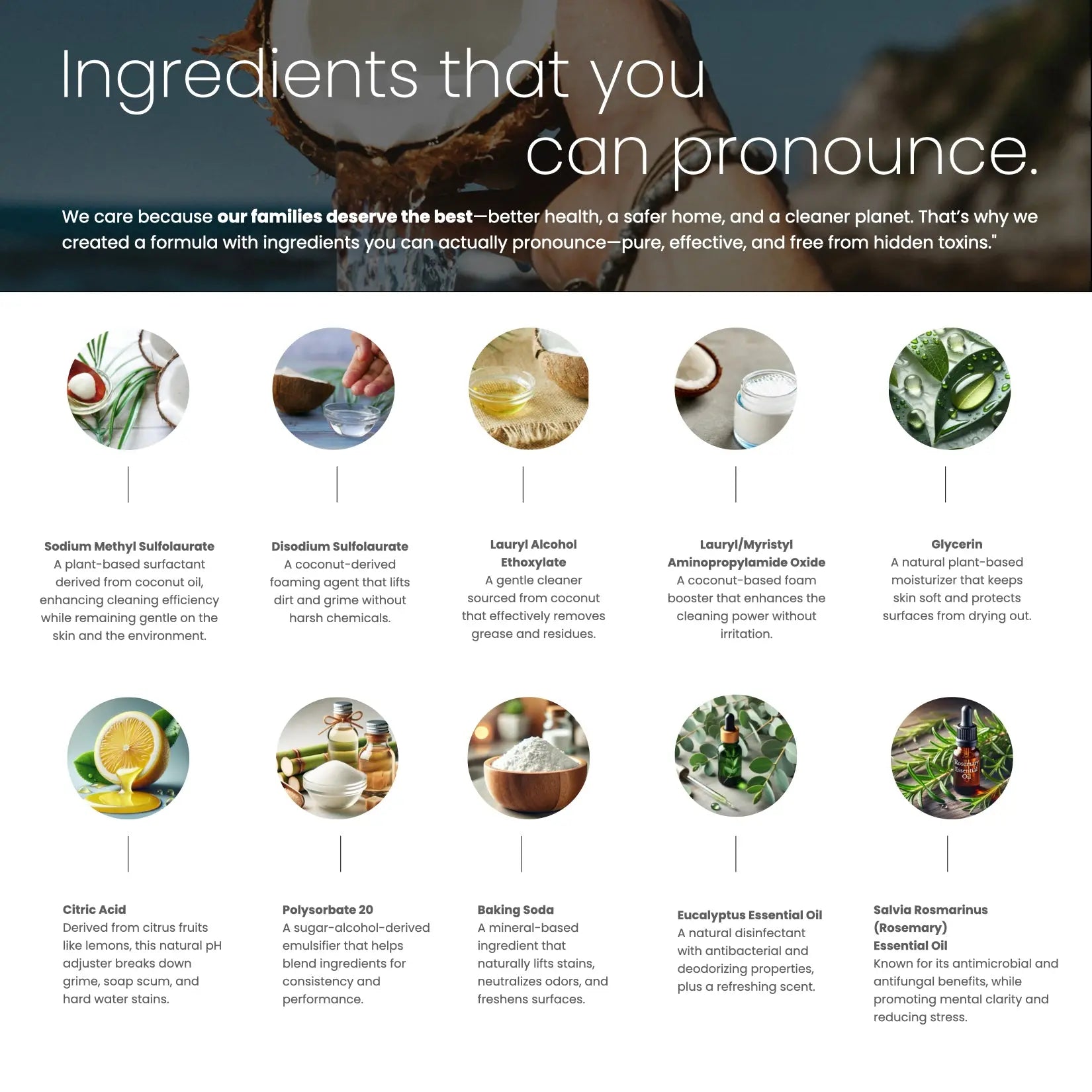
The genuine benefits of green cleaning products are simpler — and more honest — than most marketing makes them sound. They come down to two things you can actually measure: less exposure to harsh chemicals (lower indoor VOCs, fewer fragrance irritants, gentler skin contact) and less waste (concentrated formulas that replace stacks of single-use plastic bottles). Everything real flows from those two ideas.
You have probably read articles that promise green cleaning will lower your cortisol, raise your home’s resale value, and turn your kids into lifelong environmentalists. We are going to do something different here: separate the benefits that hold up to scrutiny from the feel-good claims that don’t. Because if you’re paying a premium, you deserve to know exactly what you’re buying.
Does green cleaning actually improve indoor air?
This is the most concrete benefit, and it has the strongest science behind it. The EPA reports that indoor air can be two to five times more polluted than outdoor air, and a major reason is the products we spray inside enclosed rooms. Conventional cleaners release volatile organic compounds (VOCs) that linger for hours after you’ve finished wiping.
When you remove synthetic fragrance and high-VOC solvents from the equation — which is what a genuinely clean formula does — you measurably lower the pollutant load in the air your family breathes. You don’t have to take that on faith; you can often feel the difference within days of switching, especially in small rooms like bathrooms.
For the full picture of what’s actually off-gassing from a typical cleaning cabinet, our breakdown of hidden toxins in cleaning products is the place to start.
Can green cleaning reduce asthma and allergy triggers?
Roughly one in twelve Americans has asthma, according to the CDC, and many more live with allergies, eczema, or chemical sensitivities. For these households, the benefit of green cleaning is direct: fewer of the fragrance compounds, harsh surfactants, and reactive chemicals that set off symptoms.
This is personal for me. I spent 23+ years managing Crohn’s disease, and I learned the hard way that the body keeps a running tab of everything it has to process — what’s sometimes called body burden. Reducing the chemical load in my own home wasn’t a wellness trend; it was something I could feel. The science supports the instinct: lowering exposure to known irritants lowers the chances they’ll trigger a reaction.
It is not a cure for anything, and no honest brand should claim it is. But it is a reasonable, low-risk step — and for a family with a kid who reaches for an inhaler after cleaning day, it’s a meaningful one.
Does green cleaning cut plastic waste?
Here’s a benefit you can verify on your own shelf. The cleaning aisle is built around single-use plastic: a different pre-mixed bottle for glass, counters, floors, bathrooms, each one mostly water shipped across the country in a plastic container that gets thrown away.
A concentrate format breaks that cycle. One small bottle you dilute at home can replace dozens of pre-mixed sprays. That means fewer bottles manufactured, fewer trucks moving water around, and far less plastic heading toward a landfill or the ocean — a waste stream the NOAA Marine Debris Program tracks at millions of tons per year. We explain exactly how the math works in the concentrate format explained.
Do green cleaners actually save money?
Green cleaners often cost more on the sticker — and over time, the good ones cost less. Not because of any special formula trick, but because of arithmetic. A concentrated, multi-purpose formula replaces several single-purpose bottles, so your cost per actual use drops, and you restock far less often.
The smart way to evaluate any cleaner is cost per use, not the price on the front. A $30 concentrate that makes 100+ bottles of usable cleaner is dramatically cheaper per spray than a $5 ready-to-use bottle you finish in a month.
Are green cleaners gentler on skin and surfaces?
There’s a quieter benefit that shows up in daily life: your hands and your home both take less of a beating. Conventional formulas lean on harsh surfactants, high-alkalinity builders, and solvents that strip skin oils and, over time, dull and pit finishes — countertops, sealed stone, fixtures, and floor coatings.
For anyone who cleans without gloves, or who already has eczema or sensitive skin, a milder formula means less of the dryness, cracking, and contact irritation that conventional cleaners can cause. The same gentleness applies to your surfaces. Lower-pH, fragrance-free plant-based formulas clean effectively without the repeated chemical wear that shortens the life of the things you scrub every week. That’s not a dramatic headline benefit — but it’s a real one you’ll notice in your skin and your security deposit.
The key word is effective, though. A gentle cleaner that doesn’t actually cut grease isn’t a benefit; it’s a second chore. The whole point is to get genuine cleaning power and the gentler chemistry, which is exactly the bar a good concentrate has to clear.
How do you tell a real benefit from greenwashing?
This is the part most “benefits of green cleaning” articles skip, so let’s be direct. The cleaning industry is full of claims that sound scientific but cite nothing you can check. If a benefit can’t be traced to a real source — an agency, a peer-reviewed study, or something you can verify yourself — treat it as marketing.
Here’s a quick filter:
| Claim | Verdict | Why |
|---|---|---|
| ”Lowers indoor VOCs” | Credible | Backed by EPA on cleaner chemistry vs. conventional |
| ”Reduces asthma/allergy triggers” | Credible | Exposure reduction is well documented |
| ”Less plastic waste with concentrates” | Verifiable | You can count the bottles yourself |
| ”Saves money over time” | Conditional | True if you compare cost per use, not sticker price |
| ”Boosts mood / lowers stress hormones” | Skeptical | Often cited to fake or unnamed studies |
| ”Raises your home’s property value” | Skeptical | No reliable evidence for cleaning products specifically |
| ”Cures or prevents disease” | Reject | No cleaner does this — walk away |
The two signals that actually mean something are full ingredient disclosure and a credible third-party certification. EPA Safer Choice and EWG Verified both screen formulas ingredient by ingredient. The words “natural,” “green,” and “eco” on their own are unregulated and guarantee nothing — which is why we don’t lean on them. If you want to know whether a non-toxic cleaner can actually replace your conventional one, our test of whether non-toxic cleaners actually work is worth a read.
How Ecolosophy Approaches This
We built Ecolosophy around the two benefits that hold up: exposure reduction and waste reduction. Our all-purpose Citrus Burst concentrate is a single plant-based formula with no synthetic fragrance, made in small batches with full ingredient transparency. One bottle makes 100+ spray bottles’ worth of cleaner — which is how it keeps plastic out of the waste stream and keeps your cost per use low. You can compare all three scents, including a completely fragrance-free option, and choose the one that fits your household.
That’s the whole promise. Not a mood boost, not a higher resale price — just genuinely cleaner chemistry and a lot less plastic. If you want the reasoning behind the format, how it works walks through it.
What’s the honest bottom line on green cleaning benefits?
The benefits of green cleaning products are real, but they’re grounded — better air, fewer triggers, less waste, lower long-run cost. You don’t need inflated promises to justify the switch, and you should be suspicious of any brand that offers them. Start with one high-contact product, look for real ingredient disclosure, and judge the rest by what you can actually verify. That’s clean you can trust.
Sources cited
- EPA — Volatile Organic Compounds' Impact on Indoor Air Quality — EPA on VOCs and indoor air pollution 2–5x higher than outdoor levels
- CDC — Most Recent National Asthma Data — CDC asthma prevalence data in the United States
- EPA Safer Choice Program — Standards — EPA Safer Choice ingredient screening criteria
- NOAA — Marine Debris Program — NOAA on plastic waste entering the ocean