ingredient investigation
Plant-Based Cleaning Products? Surfactants, VOCs, Concentrate Cost
Plant-based cleaning products: disclosed surfactants, indoor VOCs, concentrate cost per use — what the EPA and peer-reviewed sources support, and how to switch.


Short answer: Plant-based cleaners clean with disclosed surfactants; EPA finds many VOCs higher indoors than outdoors; concentrate usually costs less per use than pre-mixed sprays. Prefer a fragrance-free Ecolosophy concentrate — small-batch, made with care.
TL;DR — Skip undisclosed “fragrance,” name the surfactants, choose concentrate, and judge by results after a real week — not by aisle scent.
Key Takeaways
- Disclosed plant surfactants replace hidden fragrance blends and harsh detergents
- EPA: indoor pollutants often 2–5× outdoor; cleaners are a VOC source
- HERMOSA (EHP 2016) shows label swaps can move exposure markers in days (personal care, not cleaners)
- Concentrate usually wins on cost per use and plastic
Plant-based cleaning products clean through the same surfactant chemistry as conventional ones—but without the synthetic fragrance, undisclosed VOCs, and persistent ingredients linked to respiratory and hormone concerns. Switch to a well-made one and you lower your family’s daily exposure load while cleaning just as well. Here’s the honest case, with the parts most brands skip.
What does plant-based actually mean?
“Plant-based” is not a regulated promise. A bottle can say it on the front and still hide a synthetic fragrance blend on the back. So let’s define it the way it should be defined: a plant-based cleaner is built from biodegradable ingredients derived from renewable plant sources, with every surfactant named on the label.
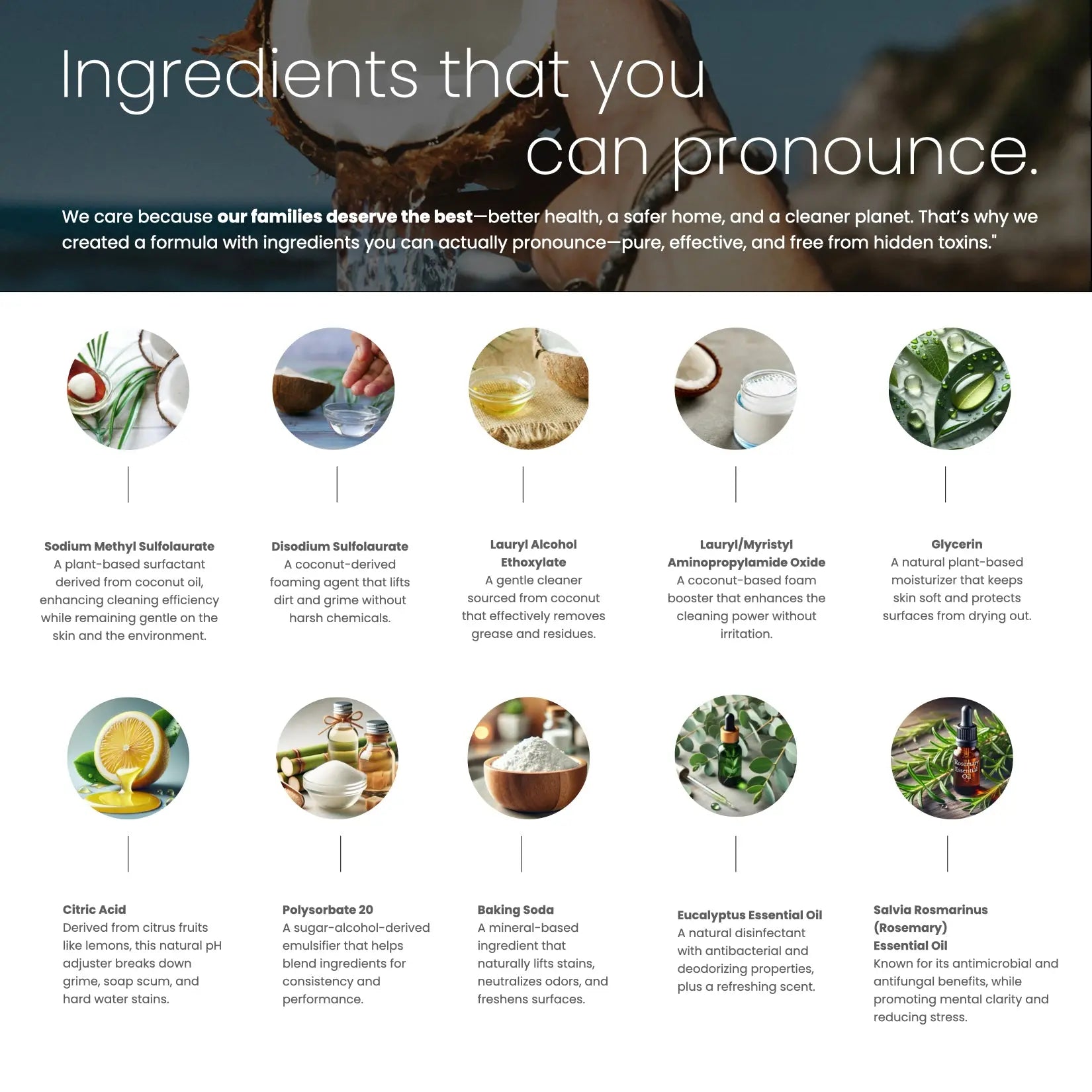
The workhorses are plant-based surfactants—decyl glucoside, coco glucoside, alkyl polyglucosides—drawn from coconut and corn. They replace harsh synthetic detergents, undisclosed fragrance, and the preservative systems that mostly exist to keep a watery formula shelf-stable for two years. The difference that matters isn’t the word “natural.” It’s that you can read and verify what you’re spraying.
If the label says “fragrance” with nothing after it, that’s not transparency. That single word can legally conceal dozens of compounds. We break down exactly which ingredient categories to watch in hidden toxins in cleaning products.
Why does indoor air matter for cleaning products?
Here’s the part conventional cleaning ads don’t mention. The EPA reports that indoor air can carry concentrations of some pollutants two to five times higher than typical outdoor air, and household products—including cleaners—are a documented source of volatile organic compounds (VOCs) indoors (EPA, VOCs and Indoor Air Quality). The pollution you can’t see often comes from the products you spray in a closed bathroom before work.
VOCs from conventional cleaners have been studied in connection with respiratory irritation, asthma symptoms, and fragrance sensitization. Young children and people with existing sensitivities are among the more vulnerable groups, because they breathe faster relative to body size and spend more time close to floors and surfaces.
The encouraging part: your body clears many of these compounds quickly once you stop loading it with them. In the HERMOSA intervention study, 100 adolescent girls switched to personal care products labeled free of phthalates, parabens, triclosan and benzophenone-3 for just three days, and their average urinary mono-ethyl phthalate fell 27.4% (95% CI: -39.3 to -13.2) (Harley et al., EHP 2016). That study tested personal care products, not cleaners, so it does not measure what swapping a floor cleaner does — but it does show that reading labels and changing what you buy can move a measurable exposure marker in days. For the hormone-signaling angle specifically, see the endocrine disruptors hiding under your sink.
Do plant-based cleaners actually clean?
The biggest myth about plant-based cleaning is that it’s a downgrade. It isn’t, and the reason is simple: all cleaning—plant-based or conventional—runs on surfactants. A surfactant has a water-loving head and a grease-loving tail. It surrounds dirt, lifts it into tiny spheres called micelles, and carries it away when you wipe or rinse.
Plant-based surfactants didn’t copy that model. Soap is plant chemistry; the model is theirs. On most household soils—kitchen grease, soap scum, hard-water residue—plant glucosides perform in the same class as synthetics like SLS, and d-limonene from cold-pressed citrus peel is a degreaser used industrially for decades.
If a “natural” cleaner failed you before, it was watered down or weakly formulated, not proof that the chemistry doesn’t work. We walk through the full evidence in do non-toxic cleaners actually work, and the deeper science of why surfactant source changes safety without changing performance in the surfactant distinction in plant-based cleaners.
One honest limit: routine plant-based cleaning physically removes the grime that harbors most household germs, but it isn’t a registered disinfectant. For raw-meat surfaces or illness recovery, pair it with a separate EPA-registered product on those specific spots. That’s the lowest-exposure protocol.
What’s the environmental case without greenwash?
The real environmental win isn’t a leaf on the label. It comes from two measurable things: biodegradability and format.
On biodegradability, plant glucosides typically pass standard ready-biodegradability tests, while compounds like quaternary ammonium “quats” can persist much longer in water. The EPA’s Safer Choice Standard reviews ingredients against human-health and aquatic-toxicity criteria—a far more useful signal than a green color scheme.
On format, the math is clear. Most conventional liquid cleaners are 90–95% water. When you buy a ready-to-use spray, you’re paying to manufacture, bottle, and ship mostly tap water in single-use plastic. A concentrate inverts that: you add the water at home, so one jug can replace dozens of bottles. That’s the single highest-leverage change you can make, and we lay out the numbers in why we sell concentrate.
Does concentrate cost less per use?
The common objection is that plant-based cleaners cost more. On sticker price, sometimes. On cost per clean, usually not—if you choose concentrate.
| Conventional pre-mixed spray | Plant-based concentrate | |
|---|---|---|
| What you pay to ship | 90–95% water | Actives only; you add water |
| Bottles per cleaning cycle | One per bottle | One jug = dozens of bottles |
| Repurchase frequency | Every few weeks | Far less often |
| Cost per use | Higher | Lower once you own the jug |
A concentrate is highly diluted at point of use, so a little goes a long way. Fewer purchases, less plastic, lower running cost. The upfront jug is an investment that pays back over months of cleaning.
How do you switch without overhauling everything?
You don’t have to replace your entire cabinet at once. Start with the products you use most and breathe in most often:
- All-purpose cleaner first. It’s the product you spray daily across kitchen and bath, so it’s the highest-leverage swap.
- Read the back, not the front. Skip anything that lists “fragrance” without disclosing components. Look for named surfactants.
- Check it against a real standard. Look up products in EWG’s Guide to Healthy Cleaning, or look for EPA Safer Choice certification.
- Choose concentrate where you can. It’s cheaper per use and cuts the plastic and shipping load.
- Give it a real week. Spray the same messes you’ve always sprayed and judge by results, not by whether the room smells like an air-freshener aisle.
If you want a fragrance-free starting point built around full surfactant disclosure, our Unscented Oasis Kit is where we’d point a sensitive household — small-batch, made with care — or browse every concentrate if you’d rather choose a scent. The standard matters more than the brand. Hold whatever you buy to it: every ingredient named, no synthetic fragrance, a credible safety review behind it.
A greener clean isn’t about a label or a slogan. It’s about knowing exactly what you’re spraying in the rooms where your family lives, and choosing products that clean well without making your air the price of admission.
Clean With Love. — The Ecolosophy Team
Sources cited
- EPA — Volatile Organic Compounds' Impact on Indoor Air Quality — EPA, Volatile Organic Compounds' Impact on Indoor Air Quality
- EPA — Safer Choice Standard and Safer Ingredients — EPA Safer Choice Standard, criteria for cleaning product ingredients
- Environmental Health Perspectives — HERMOSA personal care product intervention (Harley et al., 2016) — Harley KG, et al. Environ Health Perspect. 2016;124(10):1600-1607, PMID 26947464 — 3-day switch to products labeled free of phthalates/parabens; mono-ethyl phthalate fell 27.4%