research
How Do You Switch to Green Cleaning? Safer Formulas, Indoor Air, Concentrates
Swap your three most-used cleaners for plant-based concentrates — lower VOCs indoors and less single-use plastic.

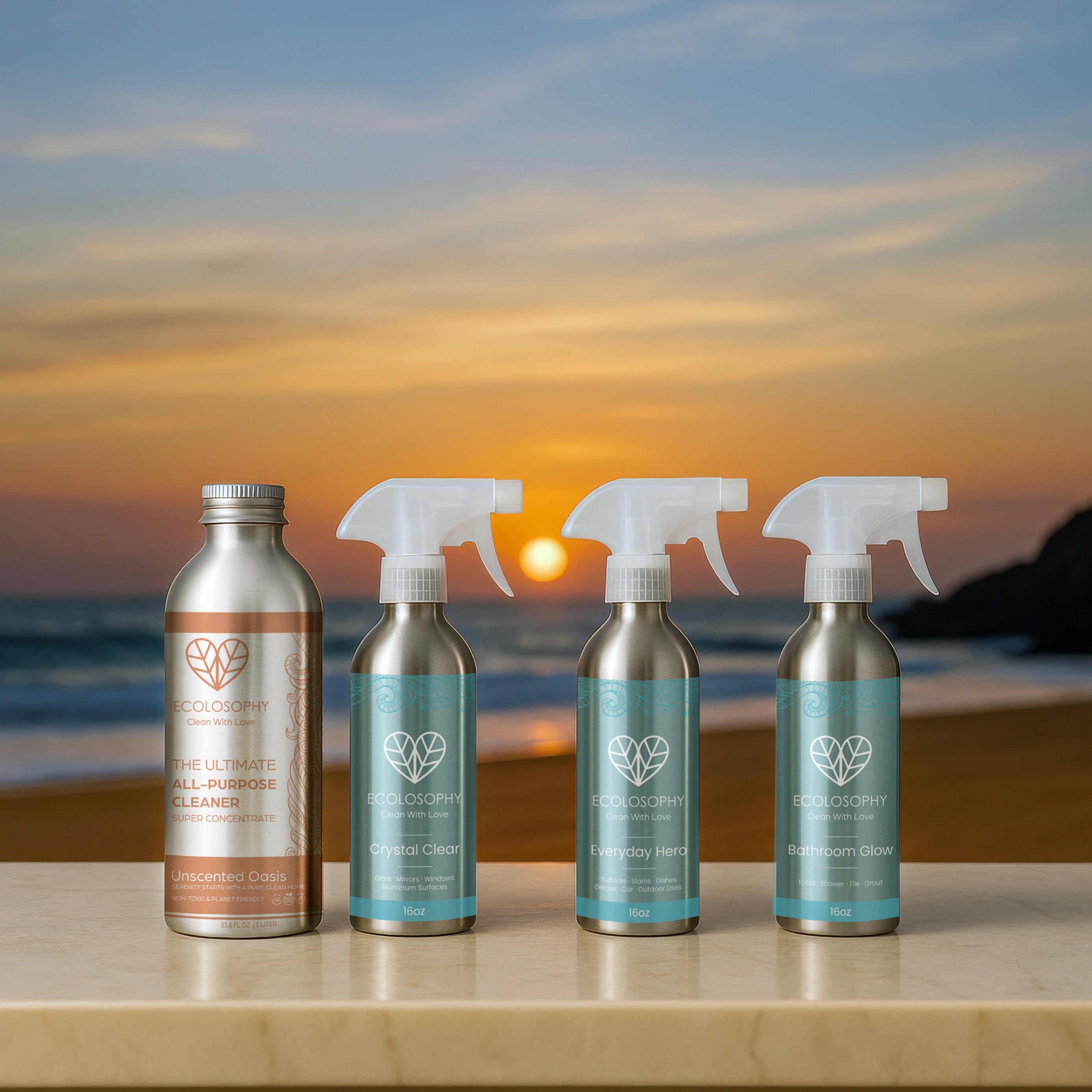
Short answer: Replace the three products you use most — usually all-purpose, dish, and laundry — with plant-based concentrates that still clean. EPA documents cleaners as a major indoor pollutant; concentrates also cut packaging. Look for Safer Choice or Green Seal, not leaf graphics. Prefer a fragrance-free plant-based Ecolosophy concentrate — small-batch, made with care.
TL;DR — Green cleaning means replacing chemical-heavy products with safer formulas that clean just as well. The EPA documents that cleaning products are a major indoor air pollutant, and a long-term study links regular cleaning-spray use to measurable lung decline. Start with the products you use most.
Key Takeaways
- The EPA reports indoor air is often 2 to 5 times more polluted than outdoor air, with cleaning products a leading contributor.
- A 20-year study in the American Journal of Respiratory and Critical Care Medicine linked regular cleaning-spray use to faster lung-function decline in women.
- Plant-based and concentrated formulas reduce the VOCs and single-use plastic that conventional cleaners rely on.
- Look for EPA Safer Choice or Green Seal certification, not unregulated front-label words.
- You do not need to overhaul everything at once. Replace your three most-used products first.
What Green Cleaning Actually Means
Green cleaning means choosing products and habits that get your home clean without loading the air, your skin, and your water with chemicals that don’t need to be there. That is the whole idea. It is not about a scent or a leaf on the label. It is about whether the formula can hold up when you read the ingredient list out loud.
Here is the part most brands skip: clean and safe are not opposites, and they never were. The grease on your stove doesn’t care whether the surfactant lifting it came from a coconut or a barrel of crude oil. What changes is everything else, what you breathe while you spray, what goes down your drain, and what your kid touches an hour later on the counter.
Why the Air Under Your Sink Matters
The home we picture as a safe haven is often the most polluted air we breathe all day. The EPA reports indoor air is typically 2 to 5 times more polluted than outdoor air, and conventional cleaning products are a leading source. Many of them release volatile organic compounds, or VOCs, that linger long after the surface looks dry.
This isn’t theoretical. A 20-year study published in 2018 in the American Journal of Respiratory and Critical Care Medicine followed more than 6,000 adults and found that women who cleaned regularly had a measurably faster decline in lung function than those who did not. The researchers tied it to the irritant chemicals in sprays. The American Lung Association adds that VOCs in cleaning supplies can cause eye, nose, and throat irritation, headaches, and worse with chronic exposure.
If you have a kid with asthma, or you’ve ever felt a headache come on halfway through cleaning a small bathroom, your body has already been telling you this.
The Plastic Nobody Talks About
Health is one half of the story. The other half is what conventional cleaning does to the world outside your door. Most conventional cleaners ship as mostly water in a single-use plastic bottle, then get poured down the drain and tossed.
The volume is staggering. The EPA’s facts and figures on plastic show Americans generate tens of millions of tons of plastic each year, and only a small fraction is ever recycled. The rest goes to landfills or the environment, where it fragments into microplastics that don’t break down on any human timescale.
This is exactly why the concentrate format exists. When you ship the cleaning power dry and let people add water at home, one bottle does the work of dozens, and you stop the plastic problem at the source instead of trying to recycle your way out of it. We break the math down in our guide to the concentrate format.
Do Safer Cleaners Actually Work?
This is the question that keeps people loyal to products they don’t trust. The fear is that “safe” means “weak.”
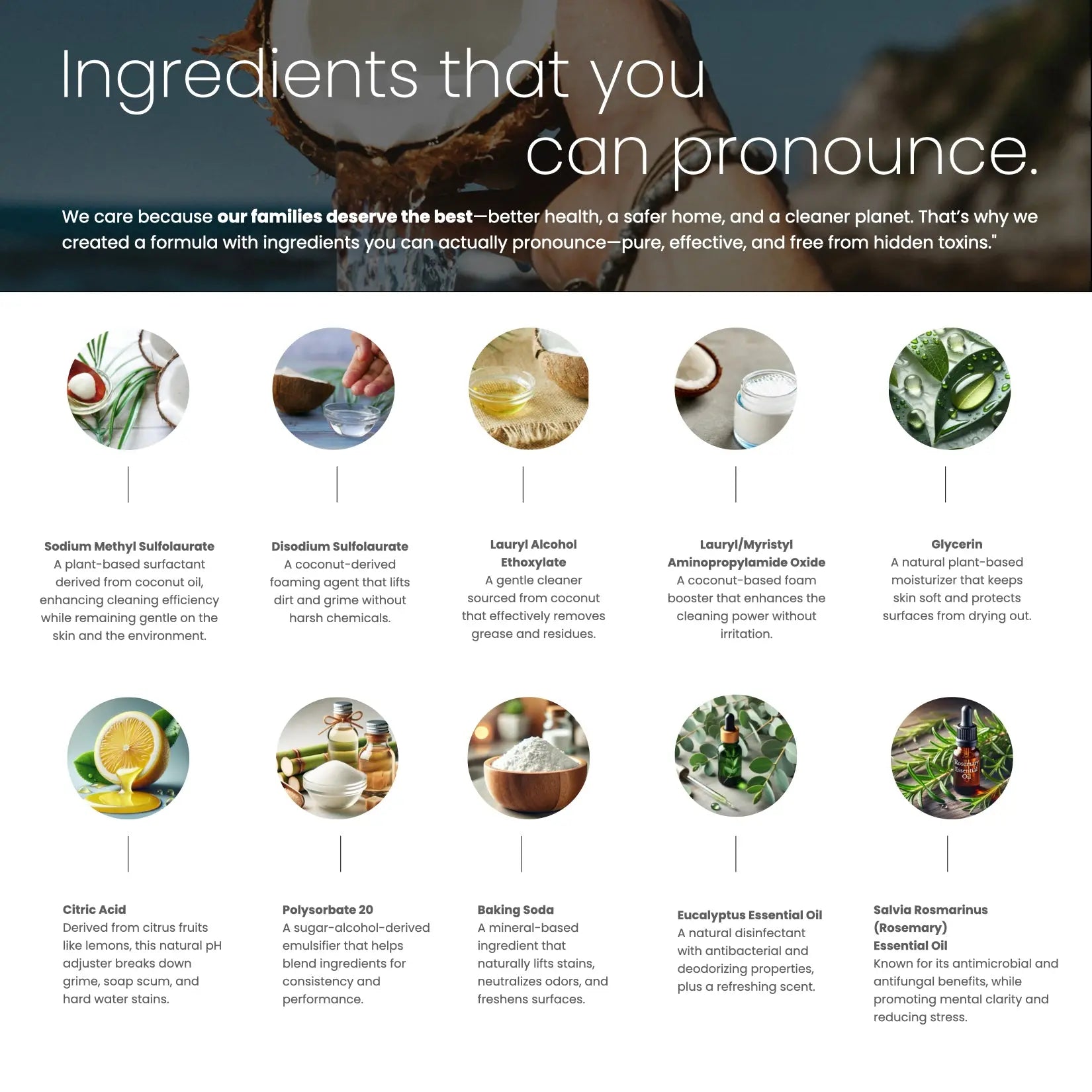
It doesn’t, and the science is clear on why. A surfactant is a molecule that grabs grease on one end and water on the other so dirt rinses away. That mechanism works the same whether the molecule is plant-derived or petroleum-derived. We get into the real chemistry in the plant-based surfactant distinction, but the short version is that performance comes from formulation, not from harshness.
The proof is in the certifications that actually require testing. The EPA Safer Choice program only awards its seal to products that meet performance standards and safety standards together. A product can’t carry that label by cleaning poorly. If you want the data laid out plainly, we tested whether non-toxic cleaners really work.
How to Switch Without Overwhelm
You don’t need to throw out everything under your sink this weekend. The fastest way to lose momentum is to make this feel like a renovation. Here is the order that actually works.
Start With Your Big Three
Replace the products you reach for most: an all-purpose cleaner, dish soap, and laundry detergent. These touch the most surfaces, the most dishes, and the most fabric against your family’s skin, so swapping them changes your exposure faster than anything else.
Learn to Read the Back, Not the Front
The front of the bottle is marketing. The back is where the truth lives. Look for full ingredient disclosure and a third-party seal that means something, EPA Safer Choice or Green Seal, rather than unregulated words like “natural” or “non-toxic.” If you’ve ever wondered why those front-label words are nearly meaningless, we documented exactly how greenwashing works.
Get the Kids Involved
When children help mix a concentrate or pick a scent, the habit becomes theirs too. You’re not just cleaning differently, you’re handing them a way of thinking about what belongs in their home.
Swap as You Run Out
Don’t waste what you already own by dumping it. Finish each conventional product and replace it with a safer one. Within a few months you’ll have rebuilt your whole cabinet without a single guilt-ridden trash bag.
Where Ecolosophy Fits
I didn’t start Ecolosophy to add another bottle to a crowded shelf. I started it after 23+ years of Crohn’s disease taught me, the hard way, how much the chemicals in an environment shape the body living in it. Every formula is plant-based, concentrated, and made in small batches with care, with nothing hidden behind the word “fragrance.”
If you want to see how one bottle replaces dozens, start with how it works, browse the full collection, or go straight to the Pure Serenity concentrate that started it all. And if you’d rather learn before you buy, our free Academy courses walk you through detoxing your home one room at a time.
The Bottom Line
Green cleaning isn’t a trend or a vibe. It’s the simple, evidence-backed decision to stop trusting the color of a label and start reading the list behind it. The EPA tells us our indoor air is dirtier than the street outside. A 20-year study tells us regular spraying costs us lung function. And the chemistry tells us we never had to choose between a clean home and a safe one.
Every small step counts. Start with one product, today.
Sources
- EPA — Introduction to Indoor Air Quality: epa.gov
- American Journal of Respiratory and Critical Care Medicine (2018) — Cleaning at home and at work in relation to lung function decline: atsjournals.org
- American Lung Association — Cleaning Supplies and Household Chemicals: lung.org
- EPA — Plastics: Material-Specific Data: epa.gov
- EPA Safer Choice Program: epa.gov/saferchoice