research
Why Does Green Cleaning Matter? Indoor Air, Lung Health, Planet
You spend most of life indoors breathing what you clean with — green cleaning lowers that dose and cuts drain pollution.

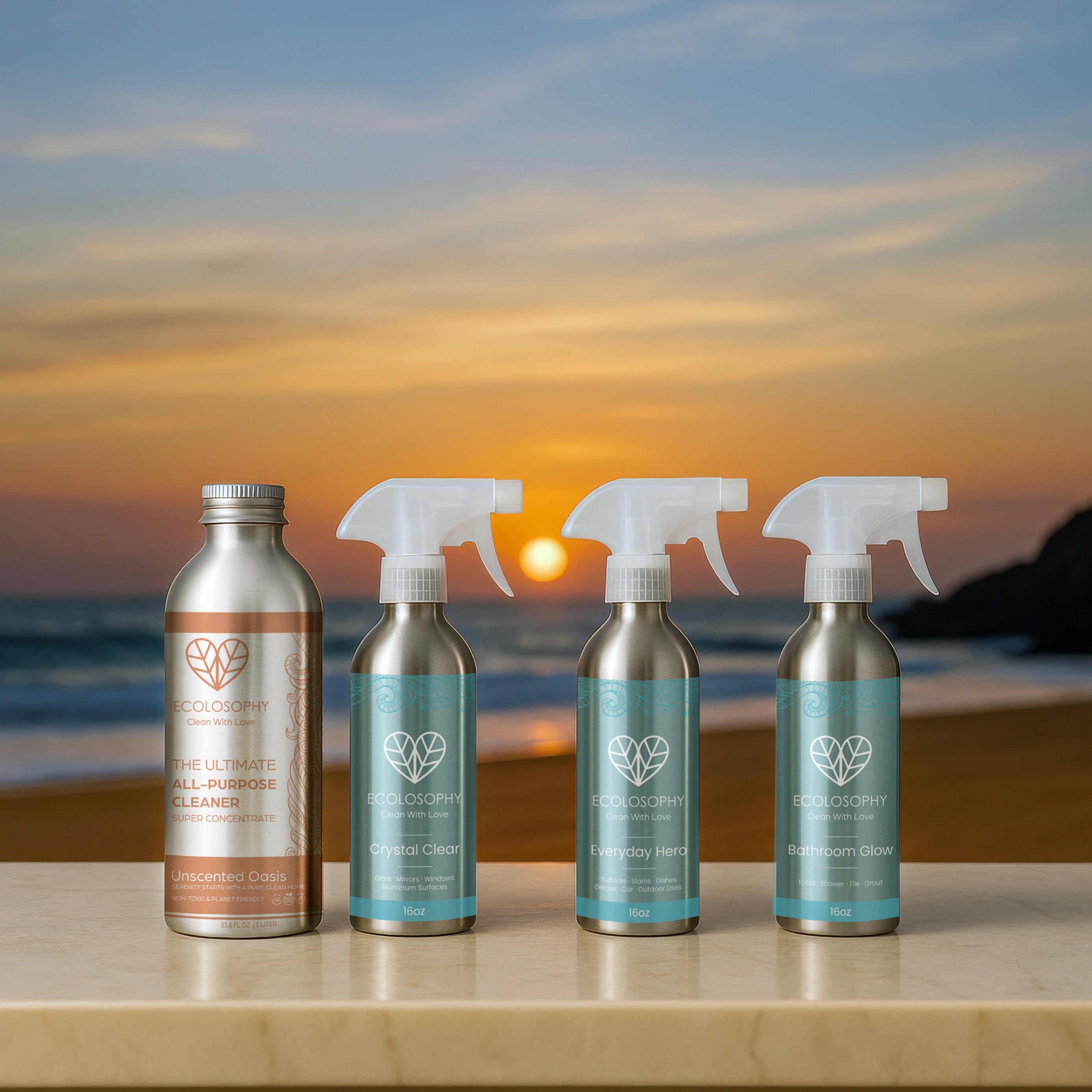
Short answer: It matters because you spend about 90% of life indoors, where cleaners shape the air you breathe and rinse into waterways. Lower-VOC, biodegradable formulas and concentrates cut exposure and plastic without an all-at-once overhaul. Start with one swap this week. Prefer a fragrance-free plant-based Ecolosophy concentrate — small-batch, made with care.
TL;DR — Green cleaning means choosing products that protect your health and the planet instead of trading one for the other. It matters because we spend most of our lives indoors breathing whatever we clean with, and because conventional formulas pollute water and air. The good news: you can start with a single product swap this week.
Green cleaning isn’t a vibe or a marketing label. It’s a practical decision about what you breathe at home and what you rinse down the drain. We spend the overwhelming majority of our lives indoors, surrounded by the residue and vapor of the products we clean with — so the cleaners under your sink quietly shape your family’s air every single day. Below is what the research actually shows, and five concrete ways to start.
I’ll be honest about why this is personal for me: after two decades of Crohn’s disease, I stopped trusting that “smells clean” meant “is safe.” Learning to read a cleaning label changed how I run my own home. Here’s the short version of what I learned.
How Does Green Cleaning Lower What You Breathe?
The single most underrated fact about indoor air is how much of it we breathe. The EPA estimates the average American spends about 90% of their time indoors — and that indoor air can be two to five times more polluted than the air outside. Conventional cleaning products are a meaningful source of that pollution, releasing volatile organic compounds (VOCs) into the rooms where you cook, relax, and sleep.
Those VOCs don’t just vanish when you finish wiping the counter. They linger, and they accumulate in tightly sealed modern homes built for energy efficiency. Over years, that low-level exposure adds up.
How much does it matter for your lungs? A widely cited long-term study by Svanes and colleagues, published in the American Journal of Respiratory and Critical Care Medicine in 2018, followed thousands of adults for roughly two decades. People who regularly used cleaning sprays showed a measurably faster decline in lung function over time, with the strongest effect among those who cleaned professionally. That’s not a reason to panic — it’s a reason to reduce avoidable spray exposure where you easily can, especially in homes with young children or anyone who has asthma.
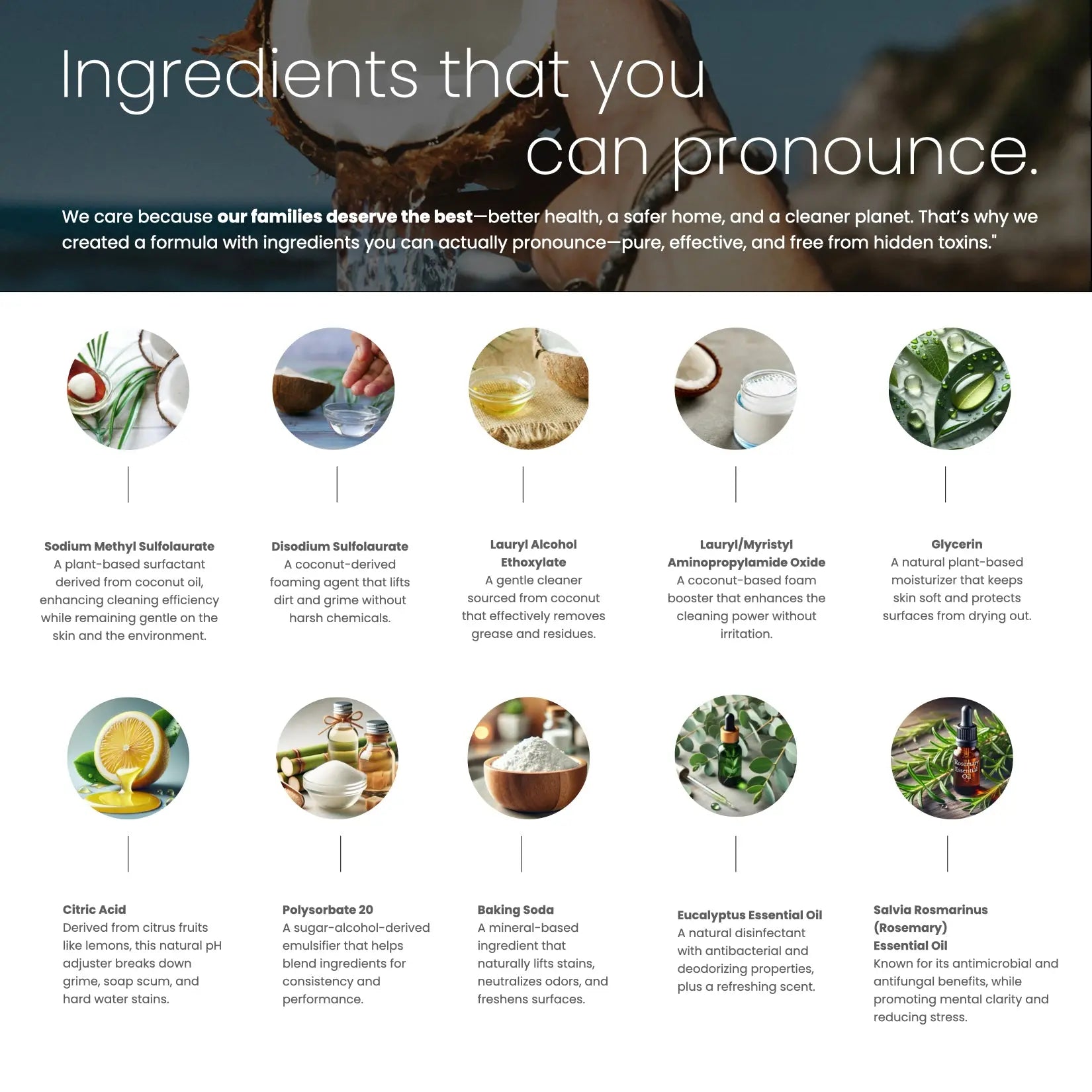
Plant-based formulas built around vinegar, baking soda, essential oils, and biodegradable surfactants can clean effectively without that VOC load. Switching isn’t about doing less cleaning — it’s about cleaning without dosing your own air.
Healthier Planet: Ingredients and Packaging
The environmental case for green cleaning comes down to two things you can actually verify: what’s in the bottle, and what the bottle is.
Ingredients. Many conventional cleaners contain phosphates, chlorine, and slow-degrading synthetic surfactants that travel down the drain and into waterways, where they can disrupt aquatic life. Biodegradable, plant-based surfactants break down faster and more completely, lowering the chemical load that reaches rivers and oceans. (Want the chemistry? Our piece on the surfactant distinction explains why two “plant-based” surfactants can behave completely differently downstream.)
Packaging. Every conventional spray bottle is mostly water shipped in single-use plastic. Concentrates and refills change that math entirely: you ship the active formula once and reuse the bottle for months. Fewer bottles produced, fewer trucks moving water around, less plastic in the bin. We break down exactly how this works in the concentrate format explained.
I’m deliberately not going to hand you a tidy “X% better for the planet” statistic, because most of the ones floating around the internet can’t be traced to a real source. The honest version is simpler: formulas that biodegrade and packaging you reuse are the two levers that genuinely matter, and both are within your control.
Why This Shift Is Happening Now
Green cleaning used to be a niche. It isn’t anymore, and the reason is the people leading it. Gen Z and millennial parents research ingredients before they buy, use apps to scan labels, and refuse to take “natural” on a front label at face value. When they find something better, they share it — across Instagram, TikTok, and Pinterest — and that turns one family’s choice into a movement.
It isn’t only younger families, either. Plenty of Gen X and boomer households have decades of practical, waste-conscious habits to bring to the table. The most durable change happens when the generation that researches ingredients teams up with the generation that never threw anything away.
What Are Five Simple Steps to Start?
You don’t have to detox your whole house this weekend. Pick one:
- Start small. Replace your single most-used product — usually the all-purpose spray — with a plant-based alternative. That one swap removes a real chunk of daily exposure.
- Keep a DIY backup. White vinegar and water for glass and counters; baking soda for scrubbing. Cheap, effective, and nothing to off-gas.
- Read labels. Look for the EPA’s Safer Choice, Green Seal, or UL Ecologo seal. Skip anything listing “fragrance” with no breakdown.
- Cut the plastic. Choose concentrates or refills over new bottles. Same clean, far less waste.
- Bring your kids in. Let them help mix and spray (the safe stuff). Habits learned young last a lifetime.
If you’re wondering whether the plant-based versions actually clean as well, that’s a fair question — we put it to the test in do non-toxic cleaners work. And if you’d rather skip the research, every Ecolosophy concentrate lists its full ingredients — the Pure Serenity concentrate is the simplest one-bottle place to start — and our free Academy will walk you through the switch one room at a time.
Green cleaning is the rare choice that’s good for the people in your home and the world outside it at the same time — and it starts with a single bottle. Pick one this week.
Sources
- U.S. Environmental Protection Agency (EPA). “Indoor Air Quality.” epa.gov
- U.S. Environmental Protection Agency (EPA). “Volatile Organic Compounds’ Impact on Indoor Air Quality.” epa.gov
- Svanes Ø, et al. “Cleaning at Home and at Work in Relation to Lung Function Decline and Airway Obstruction.” American Journal of Respiratory and Critical Care Medicine, 2018. atsjournals.org
- U.S. EPA Safer Choice Program. “Safer Ingredients.” epa.gov