
Is Borax Safe for Cleaning?
Borax shows up in every "natural cleaning" recipe on the internet — laundry boosters, homemade sprays, slime. But "natural" and "safe to leave on the floor your kid crawls on" are two different questions. Let's read what borax actually is and decide honestly where it belongs in a home with little ones and pets.
Short answer: Borax does real cleaning work, but it is not a harmless wonder mineral. The SDS flags serious eye irritation, and boron compounds carry developmental concerns at high exposure — keep it sealed away from kids and pets. Prefer a plant-based, fragrance-free Ecolosophy concentrate for everyday jobs — small-batch, made with care.
What is borax, really?
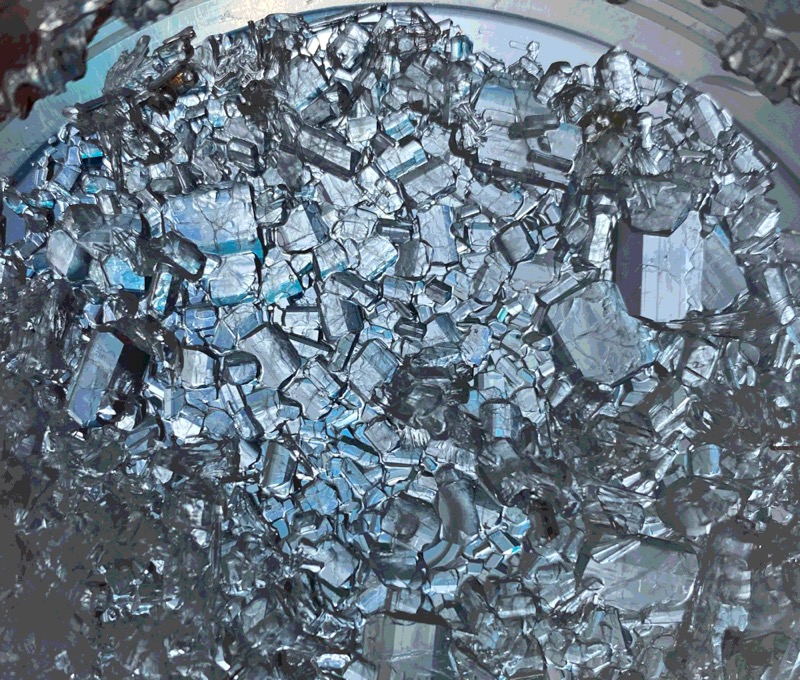
Borax is sodium tetraborate — a naturally mined mineral salt, a white powder built around the element boron. It has been used for over a century as a laundry booster, water softener, deodorizer, and all-purpose cleaning aid, which is why it carries this comforting "old-fashioned, natural" reputation. And the chemistry is real: borax raises the pH of water, helps surfactants cut grease, softens hard water so soap works better, and helps neutralize odors. It does clean.
Here is the honest truth the cleaning-blog economy glosses over: "natural" tells you where a substance came from, not whether it is gentle. Arsenic is natural. Poison ivy is natural. A mineral being dug out of the ground rather than synthesized in a lab says nothing about whether it is safe to leave on a high-chair tray or in mop water a dog might lap up. Borax earns its place in homemade recipes because it works — but "works as a cleaner" and "safe around a teething baby" are separate questions, and they deserve separate, honest answers.
It is also worth being precise, because people use the words loosely: borax (sodium tetraborate) and boric acid are related boron compounds with overlapping uses and overlapping cautions. Boric acid shows up in some pest products and is more acutely toxic; borax is the laundry-aisle powder. They are not identical, but the everyday-safety conversation — irritation, ingestion risk, keeping it away from kids and pets — applies to both.
The safety debate: why borax isn't as carefree as it sounds
This is where the internet and the science part ways. Plenty of recipes treat borax as a wholesome, kid-friendly staple. The actual safety picture is more cautious, and a careful parent deserves the real version.
- It is a classified eye irritant. The manufacturer’s SDS classifies Twenty Mule Team Borax as Eye Irritation Category 2A — “causes serious eye irritation” — and directs users to wear protective gloves, clothing, eye and face protection, and to wash thoroughly after handling (Henkel safety data sheet for Twenty Mule Team Borax, rev. 001.5, 21 March 2025). The SDS lists no skin- or respiratory-irritation hazard class for the product, so we are not claiming one; the gloves advice comes straight from the sheet.
- Swallowing it is the real-world risk. A 2021 peer-reviewed review of boron toxicity notes that fatalities from boric acid have occurred after oral ingestion, and that intact skin is a relatively effective barrier while compromised skin is not (Hadrup, Frederiksen & Sharma, Regul Toxicol Pharmacol, 2021). The same review reports that boron compounds are not genotoxic and that a two-year mouse study found no evidence of carcinogenicity — we mention that because it is true and because leaving it out would be the dishonest version. The manufacturer’s SDS says to store the product locked up. A child getting into the box is the scenario that matters.
- Reproductive toxicity — Category 2, “suspected.” The manufacturer’s own SDS classifies the product as Reproductive Toxicity Category 2 with the hazard statement “suspected of damaging fertility or the unborn child” (Henkel safety data sheet for Twenty Mule Team Borax, rev. 001.5, 21 March 2025). The 2021 review notes reproductive-toxicity endpoints in animal studies at high doses (Hadrup et al., 2021). Being precise matters here: “suspected” is a hazard classification, not a demonstrated effect at household exposure, and nobody has shown that wiping a counter with borax harms a pregnancy. It is simply the reason a household trying to conceive, or with a pregnancy in it, may reasonably prefer something that carries no such statement at all.
The micro-lesson here: the problem with borax is not that it is some shocking poison hiding in plain sight. It is that it has been marketed as casually harmless when it actually deserves the same respect you would give any cleaning chemical — gloves, ventilation, careful storage, and real caution around children and pets.
Ingestion and skin cautions — especially around kids and pets
For most homes, the realistic borax hazard is not a dramatic event — it is the slow accumulation of small, avoidable exposures around the people and animals least able to handle them.
For babies and toddlers: small children explore with their mouths. They put hands in mouths, lick surfaces, and taste anything within reach. A floor or counter wiped with a borax solution can leave a residue, and the boxed powder itself is a real ingestion risk if it is reachable. The homemade-slime trend is a specific flashpoint here: a lot of borax-based slime recipes are made and handled by exactly the age group that should not be getting borax on their hands and then in their mouths. If you keep borax in the house, it belongs sealed, high, and locked away — treated like any cleaning chemical, not like a pantry staple.
For pets: the ASPCA Animal Poison Control Center’s general position is that most cleaning products are safe around dogs and cats when used per label directions, with the risk concentrated in ingesting undiluted product or unrinsed residue (ASPCA, Poisonous Household Products). Applied to borax, the realistic danger is an animal lapping up spilled powder or fresh mop water, or getting into a homemade ant or flea mix left at floor level — not residue on a dried, rinsed floor. If a pet ingests borax, call your vet or the APCC at (888) 426-4435.
For the adult doing the cleaning: wear gloves, avoid breathing the dust, keep it out of your eyes, and never mix it casually with other cleaning products. The low-regret habit with any residue-leaving cleaner is to follow with a plain-water wipe on the surfaces kids and pets contact most, so less is left behind — see our full guide to pet-safe cleaning products for more of these residue rules.
Want the room-by-room version of this?
The free 7-Day Home Detox walks you through one room a day — what to toss, what to keep, what actually matters.
Where borax fits — and where a plant-based concentrate is simpler
Let's be fair, because fearmongering helps no one. Borax is not the worst thing in your cabinet, and an adult who genuinely needs its water-softening or deodorizing power, uses gloves, avoids the dust, and stores it locked away is using it responsibly. For some industrial-strength laundry or specific deodorizing jobs, it has a real, defensible role.
But step back and look at what that careful use actually requires: gloves, ventilation, locked storage, a residue-wipe routine, and a mental note to keep it away from the baby, the toddler, the dog, the cat, and anyone pregnant. That is a lot of ritual to keep one "natural" powder safe in a busy family home. The honest question is not "is borax evil?" — it is "do I want a daily cleaner that needs all of that, when I could use one that doesn't?"
That is the whole case for a plant-based, fragrance-free concentrate. You are not trying to make a borderline ingredient safe through careful handling — you are choosing a formula designed from the start to be family-safe and pet-safe, that you can use without gloves and without a "keep it away from the kids" ritual. For everyday kitchen, bathroom, and floor cleaning, that is simply less to manage and less to worry about — the same reasoning behind whether Fabuloso is actually safe around pets and babies.
Borax vs. Ecolosophy concentrate
Here is the honest head-to-head — borax as a general cleaning aid versus the Ecolosophy All-Purpose Cleaning Concentrate. For borax's exact classification and handling guidance, check the current safety data sheet for the product you own; the column below describes the well-documented properties of borax as a compound, not a claim about one specific brand of boxed borax.
| What matters for your family | Borax (as a cleaning aid) | Ecolosophy All-Purpose Concentrate |
|---|---|---|
| Irritant to eyes, skin, airways | Recognized irritant; gloves and dust precautions advised | Designed to be used without gloves; no harsh dust |
| Toxic if swallowed | Yes — genuine ingestion risk, especially for small children | Plant-based; still store sealed, but formulated to be family-safe and pet-safe |
| Reproductive-development flags | Boron compounds flagged at high exposure; restricted/relabeled in some regions | Plant-based; fragrance-free |
| Designed around family & pet exposure | An industrial-era mineral salt, not designed for crawling babies | Formulated to be family-safe and pet-safe |
| Handling ritual required | Gloves, ventilation, locked storage, residue wipe-down | Add water and clean — no special handling ritual |
| Format | Boxed powder you scoop, mix, and dissolve each time | Concentrate — just add water, makes 100+ spray bottles per bottle |
| Environmental footprint | Varies by use and packaging | Saves about 42.75 lbs of CO2 per bottle (our own lifecycle estimate) |
One thing we will always say plainly: Ecolosophy is a cleaner, not an EPA-registered disinfectant. We remove dirt, grease, and residue — we do not make germ-kill claims, and you should be wary of any plant-based brand that does. For everyday family messes, a strong plant-based cleaner is exactly the right tool.
What a careful family can actually do today
You do not need to fear the laundry aisle or memorize a toxicology chart. A simple, low-regret approach:
- If you keep borax, treat it like a cleaning chemical, not a pantry item: wear gloves, avoid breathing the dust, keep it out of your eyes, and store it sealed, high, and locked away from children and pets.
- Skip borax-based slime and floor-level pest recipes in homes with small kids or pets — those put a toxic powder exactly where little hands and licking paws are.
- Never mix cleaners — one product at a time, ever. This is the single most important safety habit, regardless of brand.
- If you are pregnant, trying to conceive, or have a curious toddler, the reproductive-development flags are a fair reason to move borax out of your daily rotation entirely.
- For everyday cleaning, switch to a fully understandable, fragrance-free, plant-based concentrate like the Ecolosophy All-Purpose Cleaning Concentrate. Just add water — one bottle makes 100+ spray bottles, so keeping the high-touch zones clean never feels expensive.
- For surfaces pets eat from (food bowls, the floor by their station), wipe with the diluted product, then follow with a plain-water wipe so nothing is left behind.
Why we built a cleaner you can use without a ritual
"23+ years of chronic illness — an autoimmune condition that put me in the hospital more times than I can count — made me obsessive about what actually touches my skin and my family's. I had tried the 'natural' route, the powders and the recipes, and half of them, including borax, came with their own warnings and gloves. So we built the cleaner I wished existed: plant-based, fully understandable, family-safe and pet-safe, made in small batches with care — no ritual required."
That is the real promise of a concentrate format you can trust: you are not managing a borderline ingredient with careful handling. You add water, you clean, and you do not have to think about whether the floor is safe for the baby to crawl on five minutes later. Less worry, fewer mystery cautions, more peace of mind — that is what "Clean With Love" actually means in a bottle.
Frequently asked questions
Is borax safe to clean with?
Borax does real cleaning work and can be used by a careful adult who wears gloves, avoids breathing the dust, keeps it out of eyes, and stores it sealed away from children and pets. But it is a recognized irritant, is toxic if swallowed, and carries reproductive-development flags at high exposure — so it is not the carefree "all-natural" cleaner the internet suggests. In a home with babies or pets, a plant-based cleaner is the lower-worry choice.
Is borax toxic to humans?
Borax is toxic if swallowed, and the dangerous dose is much smaller for a small child than for an adult. It can also irritate the eyes, skin, and airways, and boron compounds have been flagged by health agencies for potential reproductive and developmental effects at high exposure. Everyday careful use by an adult is far lower risk than those scenarios, but it is exactly why it deserves respect, gloves, and locked storage.
Is borax safe for pets like dogs and cats?
The main danger to pets is ingestion — a dog or cat drinking a spill or fresh mop water, or licking residue, which the powder's presence at floor level makes easy. Borax in homemade ant or flea remedies is a particular risk because it sits right where pets live. Keep it sealed and out of reach, do not leave cleaning water accessible, and if a pet ingests borax or cleaner, call your vet or a pet poison-control line.
Is borax the same as boric acid?
They are related but not identical. Borax is sodium tetraborate, the laundry-aisle powder; boric acid is a related boron compound used in some pest products and is more acutely toxic. They share overlapping cleaning uses and overlapping cautions — irritation, ingestion risk, and keeping them away from kids and pets applies to both.
Is borax banned anywhere?
Borax is restricted, reformulated, or relabeled in some markets because of how boron compounds have been classified for developmental-toxicity concerns. In the European Union in particular, borax carries warnings that have changed how it is sold and labeled. Regulations vary by region and change over time, so check the current rules and labeling where you live.
Is a plant-based concentrate just as effective without borax?
Yes. Borax is a cleaning aid, not the only way to cut grease, soften water, or deodorize. The Ecolosophy All-Purpose Cleaning Concentrate cuts everyday dirt, grease, and grime without borax, without synthetic chemicals, and without a handling ritual. Just remember it is a cleaner, not an EPA-registered disinfectant.
📕 Free download · 28 pages
Not ready to switch yet? Get the free playbook.
28 pages, every non-toxic swap, room by room. One email, no spam.
We'll email it from hello@ecolosophy.com. Reply anytime — a real person answers.
Sent. Check your inbox.
The download link is heading to your email. If you don't see it in 2 minutes, look in Promotions or hit resend.
Or grab it right now: Download the 28-page PDF →
Couldn't deliver — try again? Retry
Sources
Every health, safety or regulatory statement on this page traces to one of the following. Where a source does not support a stronger claim, we have not made one.
← Back to the full Non-Toxic Cleaning Guide
Keep Reading
Pure Serenity Kit
$69 · 4.97★ · 72 reviews