
Is Pledge Furniture Polish Toxic?
That glossy shine and lemon-fresh smell after you wipe down the coffee table feels like proof you cleaned well. But aerosol furniture polish is one of the most misunderstood products under the sink. Let's read it honestly — what's really in the can, what the worries are, and what a simpler, plant-based wood-care routine looks like.
Short answer: Not in the dramatic sense — SC Johnson’s SDS for a lemon Pledge lists gases under pressure as the main GHS class, not acute toxicity. Flag aerosol propellant, silicones, and fragrance on surfaces kids touch. Prefer a plant-based, fragrance-free Ecolosophy concentrate for dusting wipe-downs — small-batch, made with care.
What is aerosol furniture polish, and why do people ask if it's toxic?
Furniture polish in a spray can is a convenience product. Press the nozzle, a fine mist lands on the wood, you buff it with a cloth, and the table looks deeper, glossier, and smells "clean." That instant shine and that lemon-oil scent are exactly why people get uneasy — because the gloss and the smell are doing a lot of marketing work, and most of us have never read what produces them.
Here's the honest framing: a shiny surface is not the same as a clean surface, and a clean surface is not the same as a surface that's safe to touch and re-touch all day. A toddler runs a palm across the coffee table, then puts that palm in their mouth. A cat jumps up and grooms its paws after walking across the sideboard. Whatever thin film of polish is sitting on that wood, they're getting a trace of it. So the useful question isn't "is furniture polish poison?" — at label doses it rarely is — it's "is this the formula I'd choose if I could read every ingredient, and is the convenience worth what's in the can?"
One thing we'll flag up front, because honesty matters: the exact contents of any branded polish can change over time, and different products in a lineup — wipes, sprays, "lemon," "orange," matte versus high-gloss — are not identical. So instead of telling you what's "definitely" inside a specific can, we'll walk through the ingredient categories people ask about and point you to the current label or the manufacturer's safety data sheet for the bottle you actually own.
The ingredient classes people worry about
When parents research aerosol furniture polish, the same handful of ingredient families come up. Whether any specific product contains a given one depends on its exact formula, so treat this as a guide to what to look for on a label, not a claim about a particular can.
Petroleum distillate solvents
Many polishes use light petroleum-based solvents to dissolve oils, carry the shine ingredients, and flash off quickly so the surface doesn't stay greasy. These solvents are why the room can smell faintly of "fuel" under the fragrance. The everyday concern is irritation — eyes, skin, and airways — especially in a small, poorly ventilated room. The SDS we read lists hydrocarbons C7–C9 isoalkanes at 10–30% by weight, and — importantly — does not assign an aspiration-hazard classification to that product, listing “no special requirements” for ingestion first aid (S.C. Johnson safety data sheet, SC Johnson Professional Pledge Beautify Lemon Enhancing Polish, v1.8, 25 Oct 2017). Other polishes in other versions have been classified differently, so read the sheet for the can you own rather than assuming either way. The hazard the SDS does spell out is a different one: “intentional misuse by deliberately concentrating and inhaling contents can be harmful or fatal.”
Silicone oils
That long-lasting, slick, water-beading gloss often comes from silicone fluids. Silicones aren't acutely "toxic" in the poison sense, but they create a different, quieter problem: buildup. Silicone film is hard to fully remove and can soak into porous or worn wood. If you ever want to refinish, re-oil, or repaint that piece, leftover silicone can cause the new finish to bead up and fail to bond — a frustration restorers know well. So the "harm" here is less about your body and more about your furniture's future.
Flammable aerosol propellants
To push the polish out as a mist, aerosol cans use pressurized propellants that are typically flammable. That's why the can says to keep it away from heat, sparks, and open flame, and never to puncture or incinerate it. In a normal home this is a low risk if you respect the warning — but it's a real reason aerosols deserve more caution than a pump bottle, and a reason to never spray near a stove, candle, or fireplace.
Synthetic "fragrance"
The “lemon” scent is a fragrance blend, and on the bottle it appears as one word. It is not actually undisclosed: the SDS we read directs users to the manufacturer’s public ingredient site for the full composition (S.C. Johnson safety data sheet, SC Johnson Professional Pledge Beautify Lemon Enhancing Polish, v1.8, 25 Oct 2017), and under California SB 258, general cleaning products sold in California must publish every fragrance ingredient at 0.01% or more online. We have removed a line here that called fragrance a common trigger for headaches and asthma — we could not source that at household exposures, and we are not going to imply a health effect we cannot show. The point that survives on its own: the scent is added for marketing, not for cleaning or conditioning the wood — the same lesson in our breakdown of what VOCs in cleaning products actually are.
Aerosol mist and indoor air
Beyond any single ingredient, the delivery method matters, and here the manufacturer says so itself: the SDS lists “excessive exposure to spray mist, fog or vapour may cause respiratory irritation” (S.C. Johnson safety data sheet, SC Johnson Professional Pledge Beautify Lemon Enhancing Polish, v1.8, 25 Oct 2017). Note the word excessive — that is the sheet’s own qualifier, not ours. A fine mist is easy to breathe while you spray and settles beyond the target, which is a real difference from a cloth-and-oil routine. Spray in a ventilated room and don’t stand in the cloud.
The honest other side: when is furniture polish "fine"?
We promised both sides, so here it is plainly. For a healthy adult, using a furniture polish exactly as directed — a light spray, a ventilated room, wiped and buffed off, can stored sealed and away from heat — is generally considered low-risk. The dramatic poisoning stories almost always involve misuse: someone deliberately inhaling propellant, a product sprayed near a flame, or a child or pet swallowing it straight from the can. Those are real dangers, but they're misuse, not ordinary use.
So if you're a careful adult in a ventilated home with no small kids or pets licking the furniture, the realistic everyday risk from occasional, correct use is modest. The reason many families still choose to switch isn't panic — it's that a teething baby and a floor-grooming cat change the math, that aerosol mist and lingering fragrance affect indoor air, that silicone buildup can quietly ruin a piece you might want to refinish, and that a simpler routine you can fully read is just easier to trust. This is a values-and-information decision, not a fear decision — and you deserve the full picture to make it.
Want the room-by-room version of this?
The free 7-Day Home Detox walks you through one room a day — what to toss, what to keep, what actually matters.
Aerosol furniture polish vs. a plant-based wood-care routine
Here's a side-by-side of the typical aerosol approach versus a simple, plant-based routine. Because formulas vary, the polish column describes the general category, not any one product.
| Factor | Typical aerosol furniture polish | Plant-based wood-care routine |
|---|---|---|
| How it's applied | Pressurized mist you spray into the air, then buff | Damp microfiber cloth; a little plant oil only where wood is raw or oiled |
| Solvents | Often petroleum distillates (varies by product) | None added; water plus a plant-based concentrate |
| Shine source | Frequently silicone oils that can build up over time | Clean, conditioned wood; natural sheen, no silicone film |
| Added fragrance | Commonly synthetic "fragrance" | None — no artificial scents |
| Indoor air | Fine mist becomes airborne while spraying | Nothing aerosolized; nothing to breathe in |
| Flammability | Pressurized, typically flammable propellant | Non-aerosol, non-pressurized |
| Refinishing later | Silicone residue can complicate re-oiling or refinishing | Leaves wood ready to re-oil or refinish |
| Readable label | "Fragrance" and propellants can be vague | Plant-based, fully disclosed ingredients |
Notice the routine isn't a single quick-fix spray — it's a method. Most "polishing" a modern home needs is really just dust removal, and dust comes off beautifully with a barely-damp microfiber cloth. The shine you're chasing usually comes from a clean, dust-free surface, not from a chemical film.
A simple, plant-based way to care for your wood
You don't need a can to keep wood looking warm and cared-for. Here's a routine that's gentle on your family, your air, and the furniture itself.
1. Dust with a damp microfiber cloth. For everyday tables, shelves, and cabinets, a barely-damp microfiber cloth lifts dust and fingerprints and leaves a clean, even surface. No spray, no haze, nothing airborne. This alone replaces most of what people use polish for.
2. Clean sealed surfaces with a diluted plant-based concentrate. For sealed or finished wood that's actually grimy — kitchen table after dinner, a sticky cabinet door — a light mist of the Ecolosophy All-Purpose Cleaning Concentrate diluted in water, wiped and dried, cuts grease and grime without solvents or fragrance. It's a cleaner, not a disinfectant, and not a film-building polish — which is exactly the point. Test any cleaner on an inconspicuous spot first, and never soak antique or unsealed wood. The same light-touch, always-test-first approach applies to stone countertops, another surface where the wrong acid or product leaves permanent damage.
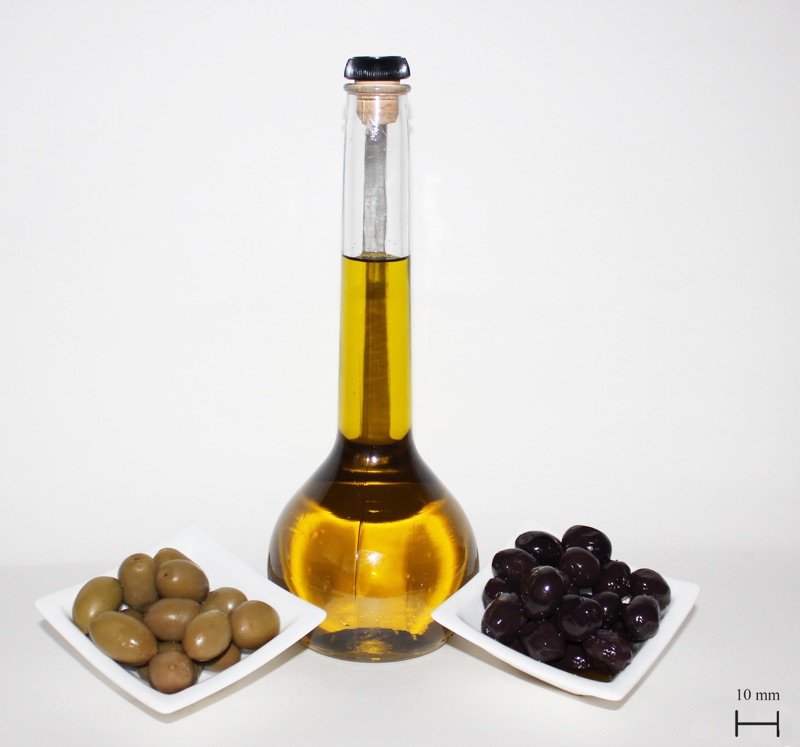
3. Condition raw or oiled wood with a little plant oil. For unfinished, oiled, or thirsty-looking wood — a butcher block, an oiled tabletop — a small amount of a food-safe plant oil, rubbed in thin and buffed off, restores warmth without silicone. Olive oil and similar plant oils have been used to nourish wood for generations; use sparingly so the surface isn't left greasy, and skip oils entirely on sealed or lacquered finishes that don't absorb.
The throughline of all three steps: nothing you can't read, nothing aerosolized, nothing that builds up and traps your furniture's future. The Ecolosophy concentrate fits this routine because it's plant-based, has no artificial scents or synthetic chemicals, and is formulated to be family-safe, pet-safe, and planet-safe. You just add water — and because one bottle makes 100+ spray bottles and saves roughly 42.75 lbs of CO2 versus buying dozens of single-use plastic cleaners, you can wipe the high-touch surfaces as often as you like without thinking about cost.
What "made with love" actually means here
Ecolosophy products are small-batch, made with care, plant-based, and free of artificial scents and synthetic chemicals. We publish what's in everything because the entire reason a family considers switching away from a mystery can is to finally be able to read the label and understand it. A cleaning concentrate replaces the spray-can habit not by promising a glossier shine, but by being honest: most wood care is dust removal plus the occasional gentle clean, and you can do both without aerosols, solvents, or perfume. That's not a downgrade in clean — it's an upgrade in trust.
One bottle. 100+ uses. No artificial scents. Nothing to aerosolize. That's what we mean by Clean With Love.
Frequently asked questions
Is aerosol furniture polish toxic to humans?
Used as directed — light spray, ventilated room, wiped off, can kept sealed and away from heat — furniture polish is generally considered low-risk for healthy adults. The realistic everyday concerns are eye, skin, and respiratory irritation, plus breathing in the aerosol mist while spraying. The serious cases almost always involve misuse, such as swallowing it, deliberately inhaling the propellant, or spraying near a flame. If you're concerned about a specific can's ingredients, check its current label or safety data sheet.
Is furniture polish safe for pets and small children?
The main danger to pets and kids is ingestion — a child or animal getting at the can, the spray, or fresh residue. Many polishes contain petroleum distillates that warn against inducing vomiting if swallowed because of aspiration risk, so swallowing is a call-poison-control situation. A thin, dried, buffed film on a ventilated surface is a smaller concern, but a teething baby and a paw-grooming cat still pick up traces. Keep cans sealed and out of reach, and consider a fragrance-free, plant-based routine that leaves no perfumed film to lick.
What ingredients in furniture polish do people worry about?
The most common concerns are petroleum-distillate solvents (irritation plus aspiration risk if swallowed), silicone oils (not acutely toxic but they build up and can complicate refinishing), flammable aerosol propellants, and undisclosed synthetic "fragrance." Whether any specific product contains these depends on its exact formula, so check the label or safety data sheet for the can you own.
Does silicone in furniture polish damage wood?
Silicone won't "poison" your wood, but it leaves a film that's hard to fully remove and can soak into porous or worn surfaces. The practical problem comes later: if you ever try to re-oil, refinish, or repaint that piece, leftover silicone can make the new finish bead up and fail to bond. A routine without silicone keeps your furniture ready for future care.
Can I just use olive oil or another plant oil on furniture?
For raw, unfinished, or oiled wood — like a butcher block or an oiled tabletop — a small amount of a food-safe plant oil, rubbed in thin and buffed off, can nourish and warm the wood without silicone. Use it sparingly so the surface isn't left greasy, and skip oils on sealed, lacquered, or painted finishes that don't absorb. For everyday dust and grime on sealed wood, a damp microfiber cloth or a diluted plant-based cleaner is the better tool.
Is a fragrance-free, plant-based routine as effective as polish?
Yes, for what most homes actually need. The "polishing" people chase is largely dust removal, which a barely-damp microfiber cloth handles beautifully, and the shine comes from a clean surface, not a chemical film. For grimy sealed wood, the Ecolosophy All-Purpose Cleaning Concentrate diluted in water cuts grease without fragrance or solvents. It's a cleaner, not a disinfectant, and not a film-building polish — which is exactly what makes it a cleaner choice.
📕 Free download · 28 pages
Not ready to switch yet? Get the free playbook.
28 pages, every non-toxic swap, room by room. One email, no spam.
We'll email it from hello@ecolosophy.com. Reply anytime — a real person answers.
Sent. Check your inbox.
The download link is heading to your email. If you don't see it in 2 minutes, look in Promotions or hit resend.
Or grab it right now: Download the 28-page PDF →
Couldn't deliver — try again? Retry
Sources
Every health, safety or regulatory statement on this page traces to one of the following. Where a source does not support a stronger claim, we have not made one.
- S.C. Johnson — Safety Data Sheet, SC Johnson Professional Pledge Beautify Lemon Enhancing Polish (v1.8, 25 October 2017)
- California SB 258 — Cleaning Product Right to Know Act of 2017 (full statute text)
- EPA — Volatile Organic Compounds’ Impact on Indoor Air Quality
- ASPCA Animal Poison Control — Poisonous Household Products
← Back to the full Non-Toxic Cleaning Guide
Keep Reading
Pure Serenity Kit
$69 · 4.97★ · 72 reviews