
Are Natural Cleaning Products Effective?
Somewhere along the way, "natural" became a synonym for "weak." A pretty bottle that smells like a garden but leaves the grease behind. That story sold a lot of harsh chemicals — and most of it isn't true. Here's what the actual chemistry of cleaning says.
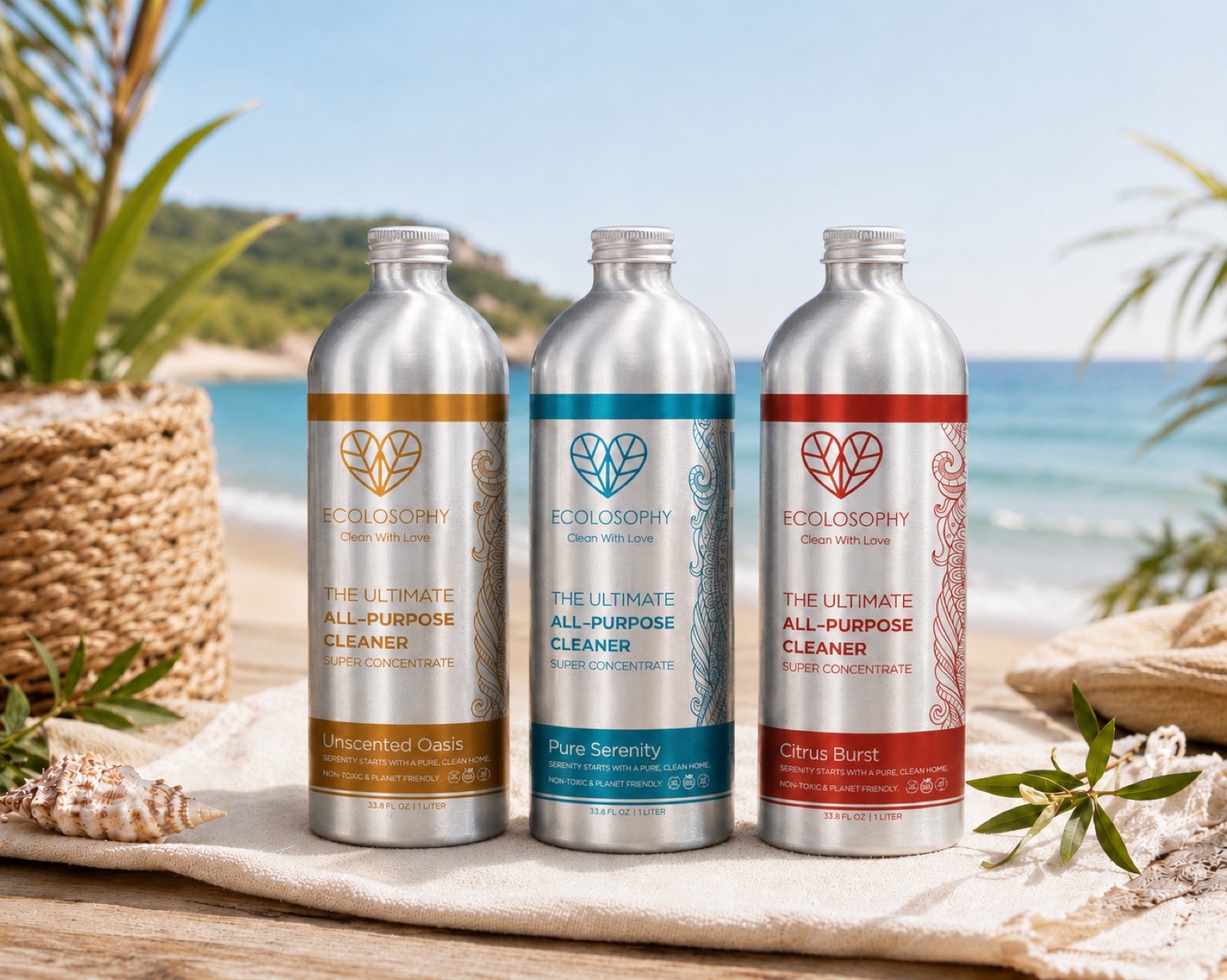
Short answer: Yes — when the formula includes real surfactants that lift soil, natural cleaners work for everyday messes. Flag weak DIY-only mixes and vague "natural" labels. Prefer a plant-based, fragrance-free Ecolosophy concentrate with disclosed ingredients — small-batch, made with care.
The myth, and where it came from
If you're old enough to have tried "eco" cleaners ten or fifteen years ago, you have a real memory backing up your skepticism. A lot of the first wave was honestly disappointing — thin, watery sprays that smelled lovely and left a film of grease shrugging back at you. You wiped twice, then reached for the harsh stuff anyway. That experience was real, and it's not fair to pretend it wasn't.
But two things happened. First, formulation got dramatically better — plant-based surfactant blends today are nothing like the weak first attempts. Second, and more importantly, marketing on both sides muddied the water. Harsh-chemical brands leaned hard on the idea that "strong smell + stinging fumes = powerful," training a whole generation to equate a burning nose with a clean counter. Meanwhile some green brands leaned on "gentle" and "mild" so heavily that they accidentally confirmed the stereotype that natural equals weak.
Here's the truth the cleaning aisle won't volunteer: the smell that "proves" a harsh cleaner is working is almost always added fragrance and solvent fumes — it has nothing to do with whether the grease left the surface. You can have a powerful cleaner with no aggressive scent at all, and you can have a useless one that reeks of "clean." Scent and cleaning power are simply two different variables. Once you separate them, the whole "natural is weak" story starts to fall apart.
How cleaning actually works: the surfactant science
To judge whether any cleaner is effective, you have to know what "cleaning" physically is. Most everyday dirt is held to a surface by grease and oil — fingerprints, cooking splatter, body oils on door handles, the sticky film on a stovetop. Water alone can't lift that, because oil and water don't mix. That's the whole problem cleaning has to solve.
The solution is a class of molecules called surfactants (surface-active agents). A surfactant molecule has two ends: one end loves water, the other end loves oil and grease. When you spray a surfactant solution onto a greasy surface, the oil-loving ends bury themselves into the grease while the water-loving ends stay out in the water. The surfactants surround little droplets of grime, lift them off the surface, and hold them suspended in the water so you can wipe — or rinse — them away. That lifting-and-suspending action is what "cleaning" actually is.
Now the key point: this mechanism doesn't care where the surfactant came from. Surfactants can be derived from petroleum, or from plants like coconut and corn. Both produce molecules with the same two-ended structure and the same grease-lifting behavior. A coconut-derived surfactant doesn't "try its best" and politely fail — it does the same physical job. The difference between a strong cleaner and a weak one is concentration and formulation: how much active surfactant is in the bottle and how well the blend is matched to real grime — not whether the source plant is "natural."
This is exactly why "natural can't really clean" is a chemistry misunderstanding, not a fact. A thoughtfully built plant-based formula with enough active surfactant cuts grease as effectively as a conventional one. The plant origin changes what you're not exposing your family to — it doesn't subtract cleaning power.
Where natural cleaners match conventional ones
For the vast majority of what actually happens in a home, a strong natural cleaner does the job fully. Think about what you really clean day to day:
- Kitchen counters and stovetops — food residue, cooking grease, sticky spills. Pure surfactant work. A good plant-based concentrate handles it.
- Tables, high chairs, and door handles — body oils, food smears, the grime of daily life. Exactly what surfactants are built to lift.
- Bathroom surfaces — soap scum, toothpaste, everyday grime on counters and sinks. Plant-based cleaners cut this readily.
- Floors — the dirt and grease a mop picks up is, again, a surfactant job, not a disinfecting one.
- Appliances and cabinets — fingerprints and greasy film wipe away with a capable natural formula.
None of these everyday tasks require a harsh chemical. They require a cleaner with enough surfactant power and a little agitation from your cloth. The idea that you need fumes and warning labels to wipe a counter is marketing, not chemistry.
The disinfecting caveat — where we're honest with you
Here is the line we will not blur, because honesty is the whole point: "cleaning" and "disinfecting" are two different jobs, and a cleaner is not automatically a disinfectant.
Cleaning physically removes dirt, grease, and a large share of germs from a surface — you lift them off and rinse or wipe them away. Disinfecting means chemically killing a specified percentage of germs that remain. In the United States that is a regulated claim: EPA states that "EPA-registered antimicrobial products may not make efficacy claims against these pathogens unless the Agency has reviewed data to support the claim and approved the claim on the label." So a "kills 99.9% of germs" line is only legitimate on a registered, tested, EPA-approved label. That registration is a regulatory and testing distinction — it is separate from whether a product is natural or conventional.
So we'll say it plainly: the Ecolosophy All-Purpose Cleaning Concentrate is a powerful cleaner, not an EPA-registered disinfectant. For your everyday surfaces — counters, tables, floors, the things your family touches constantly — cleaning is genuinely what you want, because thorough physical removal of grime and the germs that ride on it is exactly the routine those surfaces need. For the specific moments that truly call for disinfecting — say, a cutting board after raw chicken, or surfaces during illness — the responsible move is to first clean the surface, then use a product registered and labeled for disinfecting and follow its directions, including the "dwell time" it needs to stay wet to work.
Notice this caveat has nothing to do with "natural is weak." Most conventional all-purpose cleaners aren't registered disinfectants either. The cleaning-versus-disinfecting distinction applies to both worlds. What matters is matching the job to the product — and not being scared into using harsh chemistry for tasks that only ever needed good cleaning.
Natural vs. conventional cleaners: an honest comparison
Here's a side-by-side of what actually differs — and what doesn't — between a strong plant-based cleaner and a typical conventional one. Because exact formulas vary by brand and product, treat the conventional column as the common pattern, not a claim about any specific bottle.
| Factor | Strong plant-based cleaner (e.g. Ecolosophy) | Typical conventional cleaner |
|---|---|---|
| Grease & grime removal | Effective — driven by plant-derived surfactants | Effective — driven by surfactants (often petroleum-derived) |
| Everyday surfaces (counters, tables, floors) | Fully capable | Fully capable |
| EPA-registered disinfecting | No — it is a cleaner, not a disinfectant | Only if specifically registered & labeled (many aren't) |
| Added synthetic fragrance | None — no artificial scents | Commonly present (undisclosed "fragrance") |
| Harsh fumes / irritation | Minimal | Varies; some cause eye & airway irritation |
| Format & waste | Concentrate — one bottle makes 100+ spray bottles | Usually single-use, ready-to-use plastic bottles |
| What you can read on the label | Plant-based, a plant-based formula | Varies; some ingredients grouped as "fragrance" |
Want the room-by-room version of this?
The free 7-Day Home Detox walks you through one room a day — what to toss, what to keep, what actually matters.
Why concentrate makes a natural cleaner even more practical
One reason older green cleaners felt "not worth it" was a thin product at a premium price. The concentrate format flips that. With the Ecolosophy All-Purpose Cleaning Concentrate, you're buying the active ingredients and adding the water yourself at home — so a single bottle makes 100+ spray bottles of ready-to-use cleaner. You stop paying to ship water around the country, and you stop throwing away a plastic bottle every time you run out.
That has a real effectiveness benefit too: when refills are basically free, you actually clean more often and more thoroughly, because you're never rationing a pricey spray. It's also why the concentrate saves roughly 42.75 lbs of CO2 per bottle versus buying dozens of single-use ready-to-use cleaners — far less plastic and freight. Plant-based, no artificial scents, a plant-based formula, family-safe and pet-safe, and you just add water. Effective and honest, in one small bottle.
Frequently asked questions
Do natural cleaning products actually clean as well as chemical ones?
For everyday dirt and grease, yes. Cleaning power comes from surfactants, and plant-derived surfactants lift grease using the same mechanism as petroleum-derived ones. The real difference between a strong and weak cleaner is concentration and formulation, not whether the source is "natural." Some early green products were genuinely underpowered, which is where the myth came from — but a well-made modern plant-based concentrate matches conventional cleaners on the surfaces a family actually touches.
Is a natural cleaner the same as a disinfectant?
No, and that's true of most conventional cleaners too. Cleaning physically removes dirt, grease, and a large share of germs; disinfecting chemically kills a specified percentage of remaining germs and, in the US, requires EPA registration and testing. The Ecolosophy All-Purpose Cleaning Concentrate is a powerful cleaner, not an EPA-registered disinfectant. For most surfaces, thorough cleaning is what you want; for tasks that truly need disinfecting, clean first, then use a product registered and labeled for it.
Why did old "eco" cleaners feel so weak?
Two reasons. Some early formulas simply didn't have enough active surfactant, so they underperformed — a real problem that's largely been solved. And marketing trained people to read strong fumes and heavy fragrance as "power," so a low-scent cleaner felt weak even when it cleaned fine. Scent and cleaning ability are separate variables; a quiet-smelling cleaner can be very effective.
Will a fragrance-free natural cleaner leave my home smelling clean?
It leaves surfaces actually clean, which is the point. The "clean smell" most people grew up with is added fragrance, not evidence of a clean surface. A fragrance-free, plant-based cleaner removes the grime without leaving a perfume — and without the synthetic fragrance many families are trying to avoid.
Does a concentrate clean as well as a ready-to-use spray?
Yes — once you add water as directed, you have a full-strength cleaning solution. Concentrate just means you mixed the water at home instead of paying to ship it. One bottle of Ecolosophy concentrate makes 100+ spray bottles, which also means you clean more freely because refills cost almost nothing.
Is a natural cleaner safe to use around kids and pets?
That's much of the appeal. The Ecolosophy concentrate is plant-based, with no artificial scents or synthetic chemicals, and is made to be family-safe and pet-safe. As with any cleaner, store it sealed and out of reach and use it as directed. A fragrance-free formula also removes the sweet scent that can tempt a pet toward a spill or mop bucket.
📕 Free download · 28 pages
Not ready to switch yet? Get the free playbook.
28 pages, every non-toxic swap, room by room. One email, no spam.
We'll email it from hello@ecolosophy.com. Reply anytime — a real person answers.
Sent. Check your inbox.
The download link is heading to your email. If you don't see it in 2 minutes, look in Promotions or hit resend.
Or grab it right now: Download the 28-page PDF →
Couldn't deliver — try again? Retry
← Back to the full Non-Toxic Cleaning Guide
Keep Reading
Pure Serenity Kit
$69 · 4.97★ · 72 reviews