research
When Does Disinfecting Backfire? Antibacterial Soap, Quats, Hygiene Hypothesis
When does everyday disinfecting help — and when does it backfire? FDA antibacterial soap rules, CDC cleaning vs disinfecting, and what research shows.
Short answer: Everyday antibacterial soap and wipe routines often do not make a typical home safer. In 2016 the FDA banned 19 antibacterial actives from OTC hand soap after makers could not prove they beat plain soap and water. The CDC keeps soap-and-water cleaning as the everyday baseline and reserves disinfection for raw meat, illness, or known contamination.
The story: a kitchen that’s never actually dirty
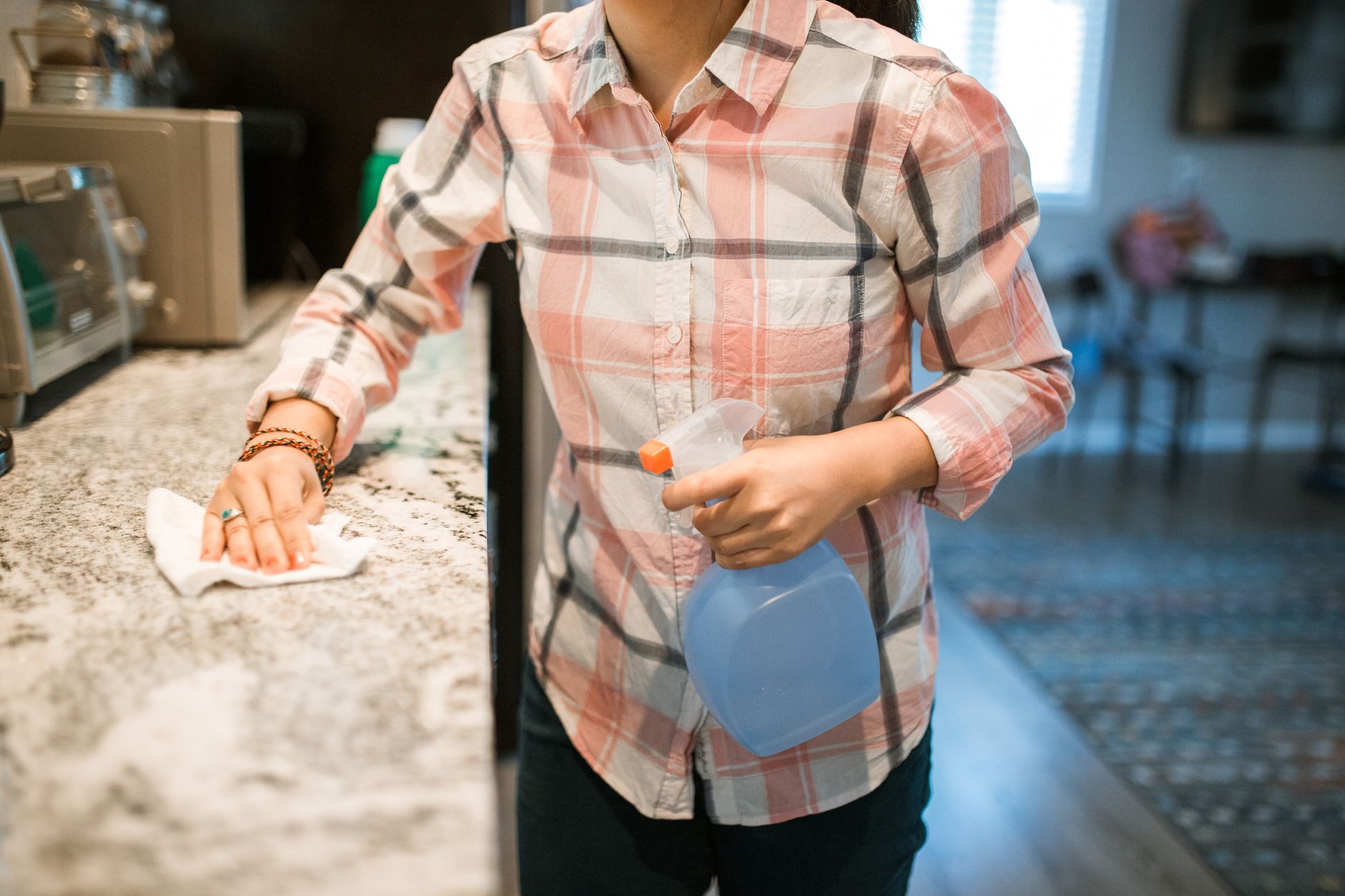
Picture the counter after dinner. Plates rinsed, dishwasher loaded, sponge put away — and then, out of habit more than need, a fresh disinfecting wipe over a surface that had nothing on it but water and a little dish soap residue. Not because anyone touched raw chicken there tonight. Not because anyone in the house is sick. Just because the counter “should” get wiped down with something antibacterial, the same way it always has, every night, whether or not anything actually happened on it that day.
That reflex isn’t random — it’s the product of two decades of marketing that quietly recategorized “clean” as “germ-free,” and “germ-free” as something you need a registered pesticide to achieve daily. The FDA eventually looked directly at that claim. The answer wasn’t what the wipe aisle implied.
The truth: the FDA already ran this experiment, and antibacterial lost
In 2016, the FDA finalized a rule that had been years in the making: it banned 19 active ingredients — including triclosan and triclocarban, the two most common antibacterial agents in soap at the time — from over-the-counter antibacterial hand soaps and body washes. The reason wasn’t a scandal. It was simpler and more damning: manufacturers were given the opportunity to submit data proving these ingredients were more effective than plain soap and water at preventing illness, and safe for the kind of daily, long-term, whole-population exposure the products actually got. None of them could (FDA Final Rule, 2016).
That’s worth sitting with. An entire product category — antibacterial soap, specifically, the thing sold on the promise of extra protection — was reviewed by the federal agency responsible for exactly that claim, and the claim didn’t hold up under its own evidence standard.
The CDC’s own guidance draws the same line for surfaces that the FDA drew for soap: cleaning and disinfecting are different jobs, and most of your house needs the first one, not the second. Cleaning with soap and water physically removes soil, and removing soil takes most everyday germs with it — the CDC treats this as the routine baseline for ordinary household surfaces. Disinfecting — using an EPA-registered product to actively kill pathogens — is reserved for specific higher-risk situations: after handling raw meat, poultry, or eggs; when someone in the house has a contagious illness; after contact with bodily fluids; or during a known contamination event (CDC, Cleaning and Disinfecting Your Home).
If you’ve wondered specifically about the bottle under your own sink — does Fabuloso kill germs walks through why the standard formula carries no EPA registration and makes no legal disinfectant claim at all. It’s a cleaner. That’s not a flaw; for the counter that saw nothing but dinner plates tonight, a cleaner is the correct tool.
The other half of the story: what “too clean” can cost
There’s a second body of research that rarely gets mentioned in the same conversation as the FDA ruling, and it points the same direction from a completely different angle: the hygiene hypothesis.
In 1989, epidemiologist David Strachan published a study in the BMJ noting that children with more older siblings had lower rates of hay fever and eczema, and proposed that early exposure to common childhood infections — the ordinary microbial noise of a busy household — might play a protective role in how a child’s immune system develops (Strachan, 1989). Nearly four decades of follow-up research has refined that idea considerably, but the core pattern has held up: environments with greater everyday microbial diversity in early childhood are consistently linked to lower rates of asthma, allergic disease, and some autoimmune conditions.
One of the clearest modern demonstrations came from a 2016 study in the New England Journal of Medicine comparing Amish and Hutterite children — two U.S. farming communities that are genetically similar but live very differently. Amish children, raised with direct daily contact with farm animals and a more microbially rich home environment, had asthma rates roughly four times lower than Hutterite children, who use more industrialized, less microbially diverse farming practices (Stein et al., 2016). That’s not a reason to bring livestock indoors — it’s evidence that a home scrubbed to sterile isn’t automatically the safer one for a developing immune system.
None of this means dirt is medicine or that you should skip cleaning up after raw chicken. It means the research doesn’t support “more antibacterial, always” as a health strategy — for soap, or for surfaces.
The micro-lesson: the ingredient in the wipe matters too, not just the frequency
The active ingredient in most disinfecting wipes and sprays today isn’t triclosan — that’s mostly gone from soap since the 2016 ban. It’s usually a quaternary ammonium compound, or “quat,” which works differently and is genuinely effective against a broad range of pathogens when used correctly. But quats have their own research flags worth knowing about with heavy, repeated exposure. A review of laboratory and clinical evidence found that repeated sublethal quat exposure is associated with reduced bacterial susceptibility and cross-resistance mechanisms — bacteria adapting to survive lower concentrations, the same broad concern that drives antibiotic-resistance research (Merchel Piovesan Barbosa et al., 2021). And occupational health research on healthcare and professional cleaning workers — the people with the heaviest, most frequent quat exposure — has found an elevated risk of new-onset asthma tied to that exposure pattern (occupational disinfectant-asthma surveillance, 2017).
A household wiping a counter with a quat-based wipe once after handling raw chicken is a very different exposure level than a hospital housekeeping shift. But “different exposure level” is exactly the point — it’s a reason to match the tool to the actual risk in front of you, not to keep a canister running at full-time frequency for a job that mostly wasn’t there.
Here’s the practical version, room by attribute rather than by rule of thumb: a cutting board that just had raw chicken on it needs an EPA-registered disinfectant, full contact time, no shortcuts. A newborn’s changing table during a stomach bug going around daycare — same answer. The kitchen counter after a normal dinner, the bathroom sink on a Tuesday, the coffee table — soap and water, or a plant-based degreasing cleaner, is the CDC’s own baseline, and it’s what the evidence actually supports for that job.
For the deeper ingredient-level version of this — what’s actually in a “germ-killing” claim and how to check it yourself — reading an ingredient label in 60 seconds and what “fragrance” on a label can legally hide both walk through the label literacy this decision actually depends on. And if you want the natural-disinfecting middle ground for the moments that do call for it, how to disinfect naturally covers what works and what the CDC’s own contact-time standards require.
The offer: clean by default, disinfect on purpose
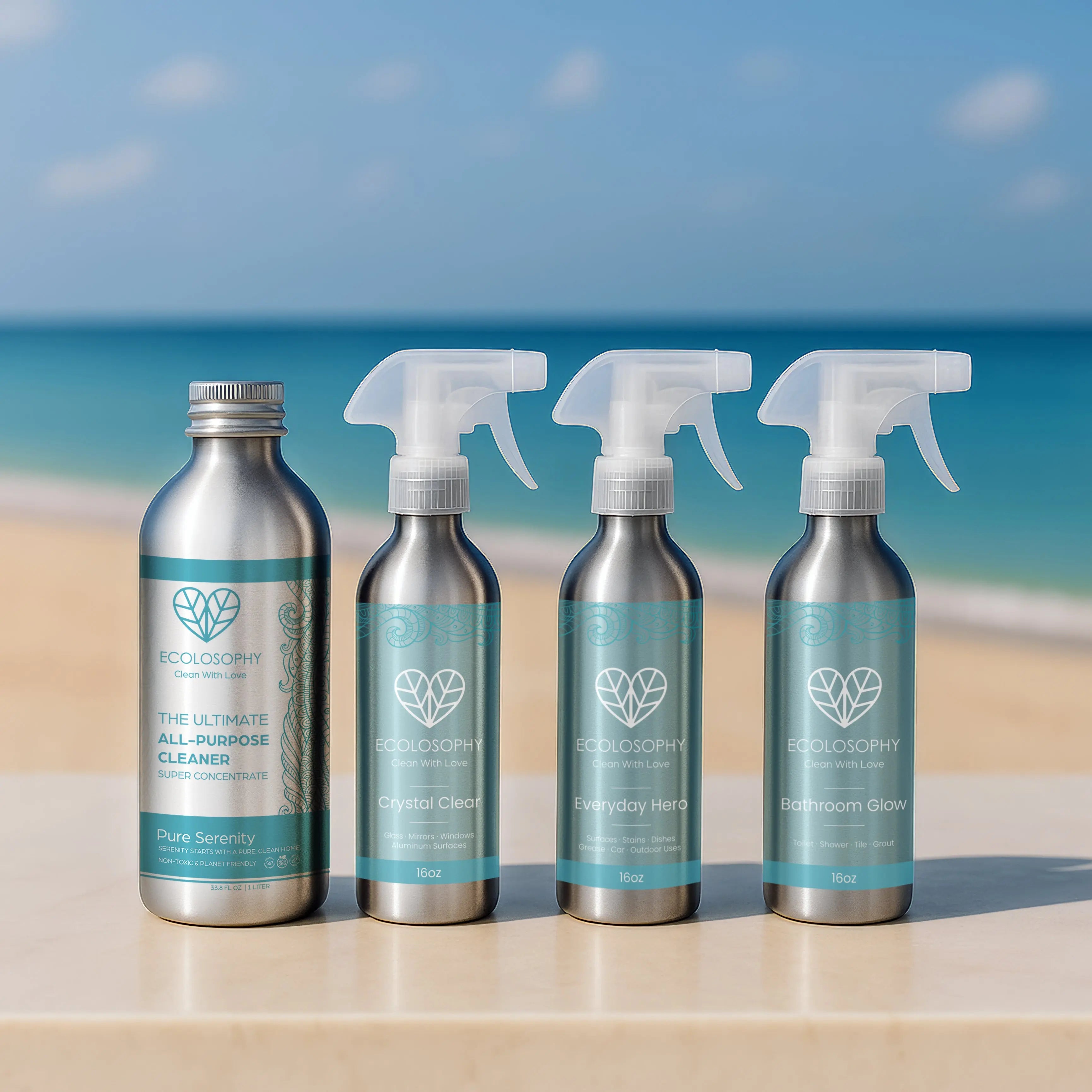
The shift here isn’t a product swap, it’s a decision framework: clean is the everyday answer, and disinfecting is a deliberate choice you make for a specific reason, not a reflex you run on autopilot. That’s exactly the gap our All-Purpose Cleaning Concentrate is built for — a genuinely effective plant-based cleaner for the 95% of surfaces in your house that need cleaning, not sterilizing, so you can reserve the registered disinfectant for the moments that actually call for it.
One bottle, water added at home, makes 100+ spray bottles — small-batch, made with care, for the everyday clean your house actually needs. Save the disinfectant for the day it’s actually earned. Clean with love.
#cleanwithlove #ecolosophy #nontoxichome #detoxyourlife #plantbasedliving
Sources cited
- U.S. Food and Drug Administration. "Safety and Effectiveness of Consumer Antiseptics; Topical Antimicrobial Drug Products for Over-the-Counter Human Use." Final Rule, Federal Register, 2016. — FDA final rule banning 19 active ingredients (including triclosan, triclocarban) from OTC antibacterial soap/body wash; manufacturers did not demonstrate the products were more effective than plain soap and water or safe for daily long-term use
- CDC. "Cleaning and Disinfecting Your Home." — CDC guidance distinguishing routine cleaning (soap and water, everyday baseline) from disinfection (reserved for raw meat contact, illness in the household, bodily fluid contact, known contamination)
- Strachan DP. "Hay fever, hygiene, and household size." BMJ, 1989. — Original hygiene hypothesis paper; found lower incidence of hay fever and eczema in children with more older siblings, proposed reduced early-childhood infection exposure as a factor
- Stein MM, et al. "Innate Immunity and Asthma Risk in Amish and Hutterite Farm Children." New England Journal of Medicine, 2016. — Amish children, raised in an environment with substantially higher microbial exposure, had asthma prevalence about 4x lower than genetically similar Hutterite children raised in a more sanitized farming environment
- Merchel Piovesan Barbosa M, et al. "Alcohol- and Quaternary-Ammonium-Based Disinfectants and Bacterial Resistance." Antimicrobial Resistance & Infection Control, review, 2021. — Review of laboratory and clinical evidence linking repeated sublethal quaternary ammonium compound (quat) exposure to reduced bacterial susceptibility and cross-resistance mechanisms
- Quinot C, et al. "Development of a Job-Task-Exposure Matrix... Disinfectant Use and Occupational Asthma." Occupational and Environmental Medicine, 2017 / related NIOSH cleaning-worker asthma surveillance. — Occupational exposure to disinfectants, including quats, associated with elevated new-onset asthma risk in healthcare and professional cleaning workers with frequent, heavy use