ingredient investigation
Does Fabuloso Kill Germs? EPA Registration, Cleaner vs Disinfectant
Does Fabuloso kill germs? Standard Fabuloso has no EPA registration — cleaner vs disinfectant, and the five-second label check.
The registration number is the only part of the label that had to be earned. Everything on the front was written by someone in marketing.
Short answer: Standard Fabuloso does not kill germs in any regulated sense — no EPA registration number. Only the separate Fabuloso Complete antibacterial line is EPA-registered (lactic acid 2.00%). Cleaning removes soil and many germs; scent is not sanitation. Prefer a fragrance-free plant-based Ecolosophy concentrate — small-batch, made with care — for everyday cleaning.
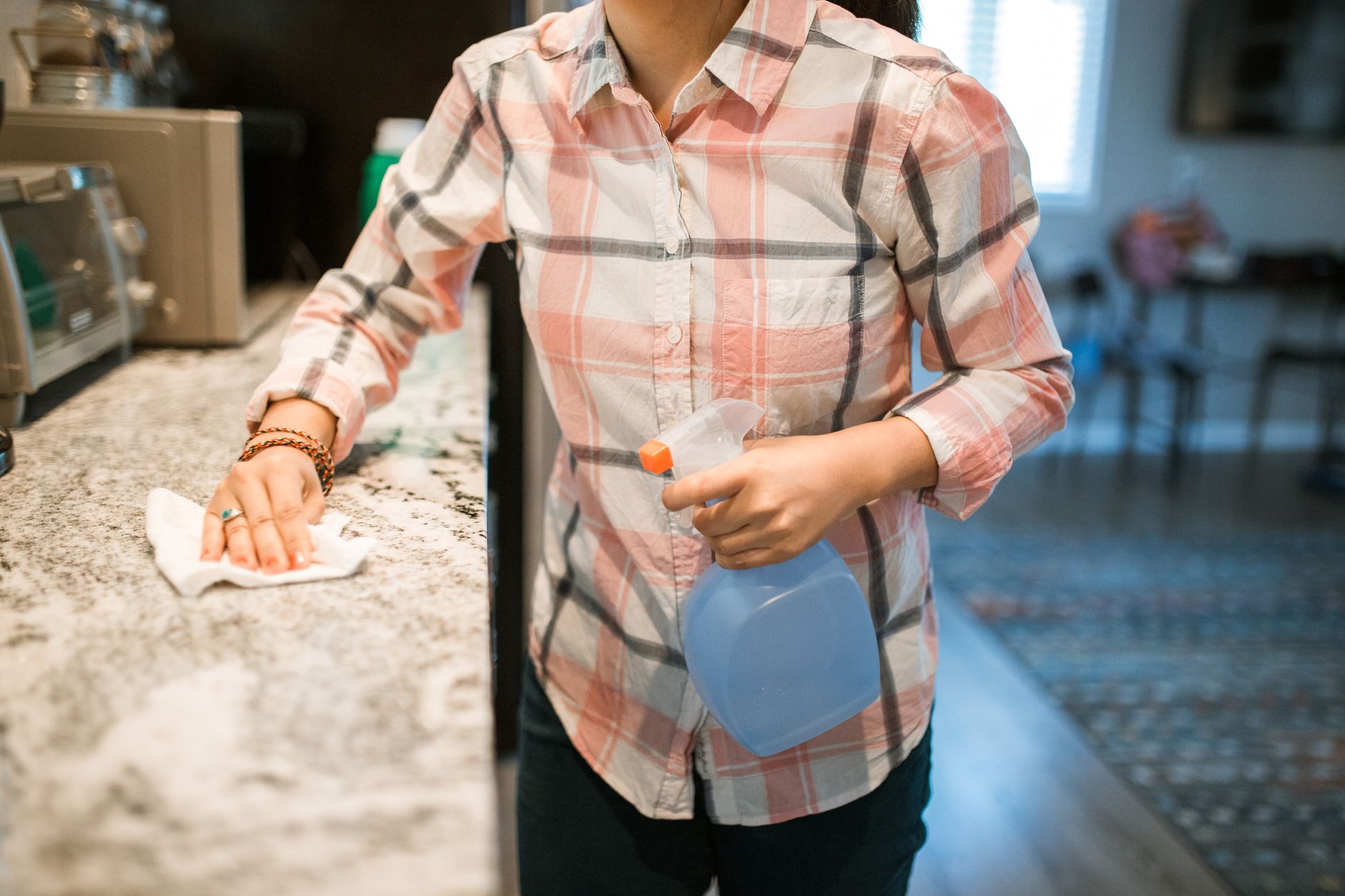
Somebody sneezed on the counter. You reach under the sink, grab the purple bottle, spray, wipe, and feel the room turn safe again. It smells like lavender and competence.
I need to tell you something about that feeling.
Does Fabuloso kill germs? Standard Fabuloso does not — not in any regulated sense. It carries no EPA registration number, and in the U.S. a product cannot legally claim to kill bacteria or viruses without one. Only the separate “Fabuloso Complete” antibacterial line is registered, and it gets there with an ingredient worth knowing about.
The good news: this is verifiable in about five seconds, on any bottle, by you. Let me show you how.
The short answer
- Standard Fabuloso multi-purpose cleaner: no EPA registration number. Cleans. Does not disinfect.
- Fabuloso Complete antibacterial: EPA-registered. Active ingredient on the accepted label is L(+)-lactic acid, 2.00%.
- The five-second check: look for “EPA Reg. No.” on the label. No number, no germ-killing claim.
- The real point: for most everyday surfaces, cleaning is the job you actually need.
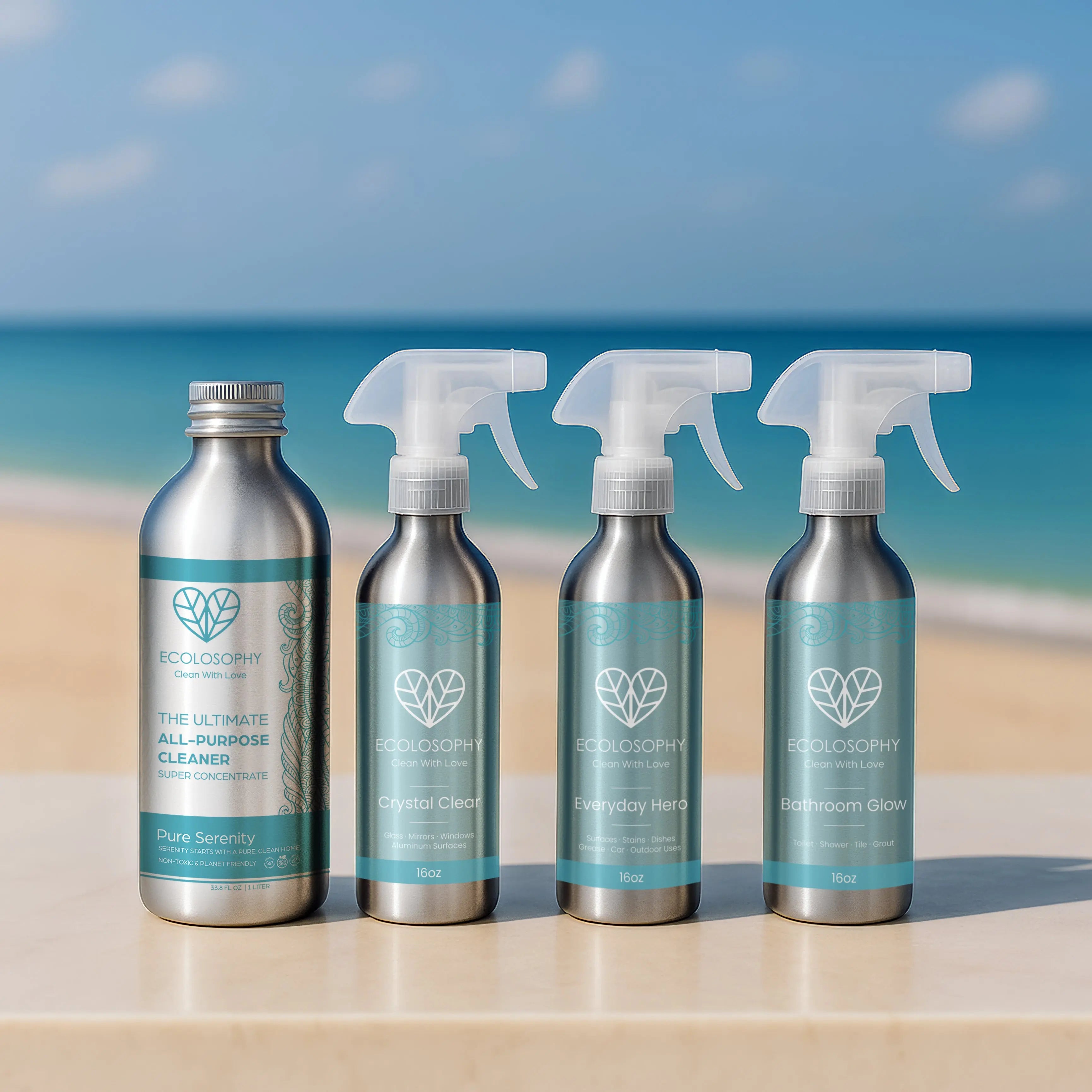
And if what you want is a cleaner that tells you everything it contains without pretending to be a pesticide, our Pure Serenity concentrate and fragrance-free Unscented Oasis concentrate are built for exactly that — real cleaning, full disclosure, no antimicrobial theatre. The Unscented Oasis kit includes the sprayers if you’re starting from scratch.
The five-second check that works on any bottle
This is the most useful thing in this article, so it goes first.
In the United States, any product that claims to kill or inactivate bacteria or viruses is legally a pesticide. The EPA regulates them as antimicrobial pesticides, and they must be registered before they can be sold with that claim.
Registration produces a number. It looks like this on a label:
EPA Reg. No. 4582-74
That’s it. That’s the whole test.
Number present → the product has been reviewed for its antimicrobial claim, and the label will tell you which organisms and how long the surface must stay wet.
No number → the product makes no legal germ-killing claim, no matter what the front of the bottle implies.
Standard Fabuloso multi-purpose cleaner has no registration number. That isn’t a loophole or an oversight. It’s an accurate reflection of what the product is: a cleaner.
The registration number is the only part of the label that had to be earned. Everything on the front was written by someone in marketing.
The “Complete” line is a genuinely different product
Here’s where the confusion is manufactured, and it’s worth being precise so you’re not misled in either direction.
Colgate-Palmolive does sell EPA-registered Fabuloso products. The Fabuloso Complete antibacterial cleaners and the disinfecting wipes are registered. You can read the accepted label for Fabuloso Complete Antibacterial, Sparkling Citrus, EPA Reg. No. 4582-74, on the EPA’s own server — not a blog’s summary of it, the document itself.
The active ingredient that earns that registration, printed on the EPA-stamped label itself, is L(+)-lactic acid at 2.00%, with the remaining 98.00% listed as inert ingredients, and the label carries a “kills 99.9% of viruses and bacteria” claim. We want to flag this plainly because we had it wrong in an earlier version of this article and because you will find it wrong elsewhere online: this product’s active is a lactic acid, not a quaternary ammonium compound. If a page tells you Fabuloso Complete is a quat disinfectant, it has not opened the label.
So both things are true at once:
- Standard Fabuloso, the purple bottle most people picture, does not disinfect.
- A differently formulated Fabuloso product, sold under the same brand, does.
They sit near each other on the shelf and look like siblings. One is a cleaner. One is a registered pesticide. The words that distinguish them — “Complete,” “Antibacterial” — read like marketing adjectives rather than a category change, which is why almost nobody notices.
Micro-lesson: brands don’t need to lie to mislead you. They just need to sell two products under one name.
Wait — so does Fabuloso do anything?
Yes, and I want to be fair to it, because “it doesn’t disinfect” gets flattened online into “it doesn’t work,” which isn’t true.
Fabuloso contains surfactants. Surfactants lower the surface tension of water so it can wet, surround and lift soil, grease and grime, which then leave the surface on your cloth or in your rinse water. That’s real cleaning, and Fabuloso does it competently.
Here’s the part that ought to be reassuring: removing soil removes a large share of germs along with it. Microorganisms don’t float in a vacuum on your counter — they sit in and on the film of food, grease, skin cells and dust that cleaning takes away. EPA puts the distinction plainly: “cleaning removes dirt and organic matter from surfaces using soap or detergents,” while “disinfecting kills viruses and bacteria on surfaces using chemicals” (EPA). Those are two different jobs, and most routine kitchen work is the first one.
Cleaning works by removal. Disinfecting works by killing. For most everyday household surfaces, removal is the appropriate job — and it’s the one Fabuloso is actually doing.
Why the smell fools everyone
The scent is doing psychological work that has nothing to do with microbiology.
We learned to associate strong clean smells with hygiene, and manufacturers have leaned on that association for a century. A heavily fragranced floor cleaner produces a powerful, immediate feeling of safety. That feeling is the product.
But fragrance tells you only that a product is fragranced. Under U.S. rules the FDA notes that fragrance ingredients are the ones most likely to receive trade-secret protection, which is why an entire mixture can be disclosed as one word. So the scent isn’t merely uninformative about germs — it’s the least transparent thing in the bottle.
The practical risk here isn’t chemical. It’s behavioural. If you believe a surface is disinfected, you skip the step that would have actually disinfected it. The misplaced confidence is the hazard, not the cleaner.
If you genuinely do need to disinfect
Sometimes you do. Someone has norovirus. Raw chicken touched the counter. There’s been an accident on the floor.
When that’s the case, do it properly — because a disinfectant used wrong is just an expensive cleaner with a pesticide in it.
- Clean first. Disinfectants are deactivated by soil. Wipe the surface clean, then disinfect. Skipping this is the most common mistake.
- Read the contact time. The label specifies how long the surface must stay visibly wet — often several minutes. Spraying and immediately wiping dry does not disinfect. This is the second most common mistake.
- Use the right product for the organism. Labels list what’s covered. Not every disinfectant handles every pathogen.
- Ventilate. Open a window while and after you work.
- Rinse food-contact surfaces afterward, unless the label says otherwise.
- Then go back to cleaning. Disinfecting is an event, not a routine.
Why “just disinfect everything” isn’t actually the safer default
It’s tempting to conclude from all this that you should just buy the registered version and disinfect everywhere, every time, to be safe. The evidence doesn’t support that either. The FDA’s own 2016 review of antibacterial hand soap found manufacturers couldn’t prove daily antibacterial use worked better than plain soap and water for a typical household — and the CDC’s guidance treats routine cleaning, not disinfecting, as the correct baseline for most everyday surfaces. We go through the full research on when disinfecting actually earns its place versus when it’s just theater in Antibacterial Everything: When Disinfecting Actually Helps (and When It Backfires) — it’s the natural next read after this one.
Antibacterial cleaners and cats
This belongs here, with one correction up front: the quat chemistry people associate with “antibacterial” cleaners is not what Fabuloso Complete uses. Its EPA-accepted active is lactic acid. But the broader category question is real, so here is the best data we found.
Nicola Bates and Nicola Edwards reviewed 245 cases of benzalkonium chloride exposure in cats reported to the UK Veterinary Poisons Information Service. The commonest signs were drooling (53.9%), tongue ulceration (40.4%), raised body temperature (40.4%) and mouth ulceration (22.9%). Household antibacterial cleaners were the single largest source category at 43.6%. And the outcome data matter as much as the symptom data: 230 of 245 cats (93.9%) recovered, 12 (4.9%) stayed asymptomatic, and 3 (1.2%) died.
Cats are more exposed than dogs for a structural reason: they walk across surfaces and then groom every paw.
So if you have cats and you reach for a benzalkonium-chloride “antibacterial” bottle because it sounded like the more careful choice, that is worth reconsidering — and either way, rinse and let the floor dry before they walk on it. There’s more in our guide to quats in cleaning products and in is Fabuloso safe for cats?.
One more thing about that bottle
It’s relevant to a germ question, so it belongs here.
On February 8, 2023 the CPSC announced a recall of about 4.9 million units of Fabuloso Multi-Purpose Cleaners because the products could contain Pseudomonas species, including P. aeruginosa and P. fluorescens — environmental organisms found widely in soil and water. CPSC’s stated hazard is specific rather than general: people with weakened immune systems, external medical devices, or underlying lung conditions face a risk of serious infection. The recall covered lot codes beginning 2348US78 through 2365US78 and 3001US78 through 3023US78, sold December 2022 through January 2023. We have seen figures quoted elsewhere for how many bottles reached shelves and what went wrong on the line; those aren’t in the CPSC notice, so we’re not repeating them.
That’s not a reason to distrust every bottle of Fabuloso — it was a defined batch, and the system caught it. But it’s a pointed footnote to a germ-killing question: a water-based scented cleaner depends entirely on a synthetic preservative system to keep bacteria out of itself.
The honest bottom line
Standard Fabuloso cleans. It does not disinfect. The scent is not evidence of anything except scent. And for the overwhelming majority of what happens in a normal house, cleaning is exactly the right job — the CDC says so plainly.
The thing worth changing isn’t necessarily your product. It’s the belief that a strong smell means a safe surface. Once you drop that, you clean more thoughtfully, you disinfect deliberately when there’s an actual reason, and you stop spraying a registered pesticide around your kitchen out of a vague sense of duty.
And you can check any bottle in any aisle in five seconds now. Look for the number.
What we’d put in your hand instead
We don’t sell a disinfectant, and we’re not going to pretend to. What we make is a cleaner that does the removal job well and tells you everything that’s in it.
Pure Serenity concentrate is $49.95 and makes 100+ spray bottles at under $0.49 each, scented with named eucalyptus and rosemary essential oils — not a fragrance blend you aren’t shown. If anyone in your home is fragrance-sensitive, or you have cats, Unscented Oasis is the fragrance-free version at the same price, and the Unscented Oasis kit comes with three refillable sprayers.
Keep reading: does Fabuloso actually clean? tests the other half of this question, is Fabuloso toxic? is the full ingredient investigation, and our natural disinfecting guide covers what to do when you genuinely need to kill something.
Sources cited
- U.S. EPA — What are antimicrobial pesticides? — Products that claim to kill or inactivate bacteria or viruses are regulated as antimicrobial pesticides and must be registered with the EPA before sale
- U.S. EPA — Fabuloso Complete Antibacterial Multi-Purpose Cleaner, Sparkling Citrus (EPA Reg. No. 4582-74) accepted label — ACTIVE INGREDIENT: L(+)-LACTIC ACID 2.00%; INERT INGREDIENTS 98.00%; "Kills 99.9% of viruses and bacteria"
- U.S. EPA — Selected EPA-Registered Disinfectants — EPA maintains lists of registered disinfectants; registration numbers allow consumers to verify antimicrobial claims
- US EPA — What's the Difference Between Products That Disinfect, Sanitize, and Clean Surfaces? — "Cleaning removes dirt and organic matter from surfaces using soap or detergents"; "Disinfecting kills viruses and bacteria on surfaces using chemicals"
- Bates N, Edwards N — Benzalkonium chloride exposure in cats: a retrospective analysis of 245 cases (VPIS) — In 245 feline exposures the commonest signs were hypersalivation (53.9%), tongue ulceration (40.4%), hyperthermia (40.4%) and oral ulceration (22.9%); household antibacterial cleaners were 43.6% of source products
- U.S. CPSC — Colgate-Palmolive Recalls Fabuloso Multi-Purpose Cleaners (February 2023) — About 4.9 million units recalled February 8, 2023 because products could contain Pseudomonas species; risk of serious infection stated for people with weakened immune systems, external medical devices, or underlying lung conditions
- U.S. FDA — "Trade Secret" Ingredients (cosmetics labeling) — Fragrance ingredients may be disclosed collectively as 'fragrance' because they are most likely to be granted trade secret status