
What Is Sodium Lauryl Sulfate (SLS)?
It is the foaming agent behind most of the suds in your home, and the reason your skin sometimes feels tight and stripped. Here is the plain-language story of what SLS actually is, why brands love it, and where it quietly hides.
Short answer: Sodium lauryl sulfate (SLS) is a foaming surfactant in soaps and some cleaners. It is not listed as a carcinogen; at higher concentrations it can irritate skin. Sensitive homes may prefer gentler surfactants. Ecolosophy uses plant-based surfactants in a fragrance-free concentrate — small-batch, made with care.
What is sodium lauryl sulfate?
Sodium lauryl sulfate (SLS) is a synthetic surfactant — a foaming, grease-cutting detergent used in toothpaste, shampoo, dish soap, and household cleaners. Almost always shortened to SLS, it's a molecule built with two opposite ends: one end loves water, the other end loves oil and grease. That split personality is the whole trick. When you rub SLS into a greasy pan or oily hair, the oil-loving end grabs the grime while the water-loving end stays anchored to the rinse water. Scrub, rinse, and the dirt washes away instead of just smearing around.
SLS belongs to a family called anionic surfactants, meaning the working end carries a negative charge. That charge is part of why it foams so aggressively and cuts grease so well. It is one of the oldest, cheapest, and most effective synthetic detergents on the market, which is exactly why it shows up almost everywhere.
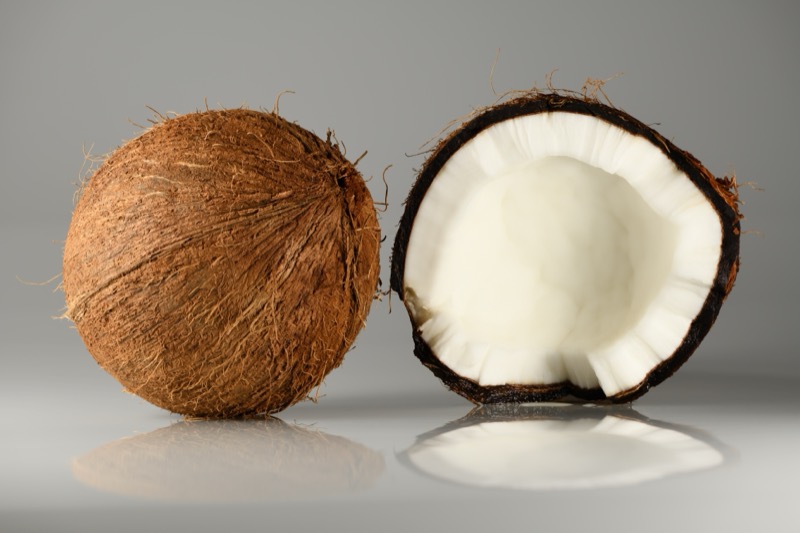
Here is the part that surprises people: SLS usually starts from something that sounds wholesome. The raw material is typically lauryl alcohol, derived from coconut oil or palm oil. But "starts from coconut" is not the same as "natural and gentle." The coconut oil is put through several industrial steps, reacted with sulfur trioxide, and neutralized with sodium, until what comes out the other end is a powerful synthetic detergent that behaves nothing like the oil it came from. A plant origin on the label does not tell you how harsh the finished ingredient is.
SLS, SLES, and the names that trip people up
SLS has a close cousin that confuses almost everyone: SLES, or sodium laureth sulfate. They are not the same molecule, and the difference matters.
- Sodium lauryl sulfate (SLS) is the more aggressive of the two. It foams hard and can be more irritating to skin and eyes.
- Sodium laureth sulfate (SLES) is "ethoxylated," a process that makes it milder. Ethoxylation can leave trace 1,4-dioxane as a byproduct. Here the FDA's own page is the fairest source, and it cuts both ways: 1,4-dioxane is "reasonably anticipated to be a human carcinogen" per NTP and "likely to be carcinogenic to humans" per EPA — both based on animal studies, with "inadequate evidence of carcinogenicity in humans." But FDA also reports that international regulators (ICCR) found reported cosmetic levels "within acceptable margins of exposure," that the EU's SCCS considers trace levels of ≤10 ppm safe for consumers, and that FDA's own monitoring shows "a significant decline over time in the levels of this contaminant." So this is a "worth knowing, not worth panicking over" item.
Neither is a villain. SLS is the harsher irritant on contact at higher concentrations; SLES is gentler but carries a manufacturing-byproduct question that regulators currently consider managed. This is a big reason we think the simpler answer is to skip both and reach for plant-based surfactants where you can.
To make label-reading even trickier, SLS hides under several aliases. Watch for: sodium dodecyl sulfate, sodium lauryl sulphate (British spelling), sodium salt sulfuric acid monododecyl ester, and A13-00356. When a brand wants to avoid the SLS reputation without changing much, it sometimes lists one of these longer chemical names instead.
Why brands love it so much
If SLS irritates skin, why is it in nearly everything? Three reasons, and none of them is about being good for you.
It is cheap. SLS is one of the lowest-cost surfactants available, produced at massive industrial scale. For a company filling millions of bottles, pennies per unit add up fast, and SLS keeps the cost down.
It foams like crazy. Here is the psychology brands quietly rely on: most of us equate big, rich suds with "this is really cleaning." It is a learned association, not a fact. Lots of foam does not mean more cleaning power, but it feels powerful, so products are engineered to lather even when the bubbles do nothing for performance. SLS is the foam workhorse that delivers that satisfying lather.
It genuinely cuts grease. To be fair, SLS is effective. It lifts oil and grime efficiently, which is why it earned its place in degreasers and dish soaps long before anyone worried about skin barriers.
So the honest picture is a trade-off: cheap, foamy, and effective on one side; drying and irritating on the other. Brands have historically chosen the first three and let you absorb the last one.
Is SLS bad for you?
SLS is a concentration-dependent skin irritant. It is not a carcinogen. Let us be precise, because the internet swings between "totally harmless" and "it causes cancer," and neither extreme survives contact with the evidence.
On cancer, the answer is a clear no. A peer-reviewed review documents that SLS is not listed as a carcinogen by IARC, the National Toxicology Program, California Proposition 65, the EPA, or the European Union, and concludes that "the perception that SLS is a threat to human health is not scientifically supported, and claims made to the contrary should be regarded as false and misleading" (Bondi et al., 2015 — authors are personal-care industry scientists, which we note so you can weigh it yourself, but the regulatory-listing facts are independently checkable). We are not going to fearmonger.
On irritation, the evidence is real and it is about dose. The Cosmetic Ingredient Review panel concluded SLS is an irritant in patch testing "at concentrations of 2 percent and greater," with irritation increasing as concentration rises, and recommended that skin-applied cosmetics not exceed 1%. Dermatology researchers rely on this predictability: SLS is used as the standard irritant control in patch testing, typically at 0.25% aqueous, precisely because its response is reproducible (Contact Dermatitis, 2003).
Mechanically, SLS disrupts the skin barrier — controlled human studies show altered expression of barrier proteins after occluded exposure (Törmä et al., 2008, using 1% SLS under an occlusive patch for 24 hours). Note the exposure conditions: an occluded patch held against skin for a day is not the same as a rinse-off hand soap. The 2015 review puts the practical bound plainly — below 0.1% w/w, SLS is non-irritating even to the eyes. Effect scales with concentration and contact time.
For most healthy adults using rinse-off products as directed, SLS is a minor annoyance at worst, and the peer-reviewed literature supports that. The people who feel it most are those with sensitive or compromised skin, babies and small children with thinner skin barriers, and anyone with eczema or contact dermatitis. If "my hands feel raw after cleaning" sounds familiar, SLS is a prime suspect.
Where is SLS found?
SLS shows up in toothpaste, shampoo, body wash, dish soap, laundry detergent, and many all-purpose cleaners — it is not in one product, it is in dozens of small ones you touch all day. Once you know where it lurks, you start seeing it everywhere.
- Bathroom: shampoo, body wash, bubble bath, hand soap, facial cleanser, and most foaming toothpaste. Yes, the foam in your toothpaste is often SLS. Whether it triggers canker sores (aphthous ulcers) is genuinely debated in the dental literature, with trials pointing both ways, so we won't state it as settled.
- Kitchen: dish soap, dishwasher detergent, and many "grease-cutting" sprays.
- Laundry room: plenty of detergents and stain pre-treaters lean on SLS for foam and grease-lifting.
- All-purpose cleaners: a wide range of multi-surface sprays and floor cleaners use it as the core surfactant, including many marketed for the bathroom — see our non-toxic bathroom cleaner guide for gentler picks.
None of these is a crisis on its own. But it is the same logic we apply to the whole home: a dozen small "low-risk" exposures across the products your family uses every single day is worth questioning, especially when gentler swaps exist and clean just as well.
How to spot it on a label
You do not need a chemistry degree to dodge SLS. You need about ten seconds and a habit. Here is the quick routine.
- Flip the bottle and read the ingredient list. Surfactants are usually near the top, since they make up a meaningful share of the formula.
- Scan for the keyword "sulfate" (or "sulphate"). If you see sodium lauryl sulfate or sodium laureth sulfate, you have found it.
- Watch for the aliases: sodium dodecyl sulfate, sodium salt sulfuric acid monododecyl ester, A13-00356. These are SLS wearing a disguise.
- Do not trust "natural" or "coconut-derived" alone. As we covered, SLS itself can be coconut-derived. Origin claims do not tell you whether the finished ingredient is harsh.
- If the brand hides its full ingredient list, treat that as its own red flag. Radical transparency means a company tells you exactly what is inside. If you cannot find a full list, check the current product page or label rather than assuming.
One caveat we hold ourselves to: formulas change. If you are trying to confirm whether a specific competitor product still contains SLS today, check that brand's current label or website rather than relying on a number from a blog post, ours included.
Want the room-by-room version of this?
The free 7-Day Home Detox walks you through one room a day — what to toss, what to keep, what actually matters.
The Ecolosophy approach: clean without the strip
We are not anti-foam or anti-surfactant. You need surfactants to actually clean; that is real chemistry. What we question is leaning on the cheapest, harshest one because it foams dramatically and costs almost nothing.
The Ecolosophy Pure Serenity Kit uses plant-based surfactants to cut everyday grease, dirt, and grime, with no added fragrance and riding along for marketing — the same no-fragrance standard we hold ourselves to when we explain whether "fragrance-free" really means fragrance-free. It is family-safe, pet-safe, and planet-safe, the kind of cleaner you can use on the counter your kid eats off and the floor your dog naps on without that tight, stripped feeling on your hands afterward.
Because it is a concentrate, one bottle makes 100+ spray bottles. You just add water. That is not only easier on your wallet, it saves about 42.75 lbs of CO2 per bottle compared to buying dozens of single-use plastic cleaners (our own lifecycle estimate). One small bottle replaces a cabinet full of foamy, sulfate-heavy sprays. That is what clean is supposed to look like.
One honest note: an all-purpose cleaner is a cleaner, not an EPA-registered disinfectant. For everyday dirt, grease, and grime across your home, that is exactly what most of us need most of the time.
Frequently asked questions about SLS
Is sodium lauryl sulfate dangerous or toxic?
No. SLS is not listed as a carcinogen by IARC, the National Toxicology Program, California Proposition 65, the EPA, or the European Union, and a peer-reviewed review concludes it is "safe for use in consumer household cleaning products." The real, documented issue is concentration-dependent irritation: the Cosmetic Ingredient Review panel found it irritating in patch testing at 2% and above, rising with concentration. It is a dose-dependent irritant, not a poison.
What is the difference between SLS and SLES?
SLS (sodium lauryl sulfate) is the harsher, more aggressively foaming version. SLES (sodium laureth sulfate) is ethoxylated to be milder, but that process can leave trace 1,4-dioxane, a contaminant manufacturers are supposed to remove. Neither is an obviously clean choice, which is why we prefer plant-based surfactants instead.
Does more foam mean a product cleans better?
No. Big, rich suds are largely a learned signal of "this is working," not proof of cleaning power. The actual grease-lifting is done by the surfactant, not the bubbles. Products are often engineered to foam more than they need to because we expect it. A lower-foam, plant-based cleaner can clean just as well.
Is SLS safe in toothpaste?
The foam in many toothpastes is SLS. It is generally considered low-risk to swallow in those tiny rinse-and-spit amounts, but it is a known trigger for canker sores (mouth ulcers) in some people. If you get recurring canker sores, switching to an SLS-free toothpaste is a common and easy thing to try.
How do I know if a cleaner contains SLS?
Flip the bottle, read the ingredient list, and scan for "sulfate" or "sulphate," or the aliases sodium dodecyl sulfate and sodium salt sulfuric acid monododecyl ester. Do not rely on "natural" or "coconut-derived" claims, since SLS itself is often coconut-derived. If a brand hides its full ingredient list, treat that as a red flag, and check the current label since formulas change.
Why does Ecolosophy avoid SLS?
Because we can clean a home effectively without the cheapest, harshest, most drying surfactant. The Ecolosophy All-Purpose Cleaning Concentrate uses plant-based surfactants with no added fragrance, cleans everyday grease and grime, and one bottle makes 100+ spray bottles, saving about 42.75 lbs of CO2 versus dozens of single-use plastic cleaners.
📕 Free download · 28 pages
Not ready to switch yet? Get the free playbook.
28 pages, every non-toxic swap, room by room. One email, no spam.
We'll email it from hello@ecolosophy.com. Reply anytime — a real person answers.
Sent. Check your inbox.
The download link is heading to your email. If you don't see it in 2 minutes, look in Promotions or hit resend.
Or grab it right now: Download the 28-page PDF →
Couldn't deliver — try again? Retry
← Back to the full Non-Toxic Cleaning Guide
Keep Reading
Pure Serenity Kit
$69 · 4.97★ · 72 reviews