
Is Rubbing Alcohol Safe to Clean With?
It's in nearly every medicine cabinet, it dries in seconds, and it smells like "hospital clean." But is rubbing alcohol actually a smart everyday cleaner for a home with kids and pets — or a useful tool that's been quietly promoted out of its lane?
Short answer: Yes for the right jobs — screens, phones, doorknobs, small hard spots where fast evaporation helps. It is highly flammable, vapors irritate in closed rooms, and it can dry skin and damage finishes. Keep it a spot tool. Prefer a plant-based, fragrance-free Ecolosophy concentrate for everyday surfaces — small-batch, made with care.
What rubbing alcohol actually is
"Rubbing alcohol" almost always means isopropyl alcohol (isopropanol) mixed with water — most commonly sold at 70% or 91% strength. It is a solvent, which is the key to understanding both its strengths and its limits: it dissolves oils, lifts residue, and then evaporates fast, leaving little behind. That's why it feels so satisfyingly "clean" — there's no film, no streak, no lingering wet patch.
It's worth clearing up one common surprise: a higher percentage isn't automatically better. The CDC’s disinfection guideline puts the optimum bactericidal range at 60%–90% alcohol in water, and explains that absolute alcohol is less bactericidal than alcohol–water mixtures “because proteins are denatured more quickly in the presence of water.” So both 70% and 91% sit inside CDC’s effective range. What is not true is that higher is automatically stronger — and cidal activity drops sharply below 50%.
None of that makes it a bad product. Rubbing alcohol is genuinely useful, and we're not here to scare you off a tool that belongs in most homes. The honest question is narrower and more practical: is it the right thing to reach for when you're cleaning the whole house, every day, on the surfaces your family lives on? That's a different question than "is it ever useful," and the answer turns on three things — flammability, vapor, and what it does to surfaces and skin over time.
Where rubbing alcohol genuinely shines
Let's give it full credit first, because a fair answer names what something is good at. There are jobs where rubbing alcohol is arguably the best tool you can keep on hand:
- Electronics and screens: because it evaporates almost instantly and leaves no moisture behind, isopropyl alcohol is a go-to for cleaning phones, keyboards, laptop trackpads, remote controls, and camera lenses. Water-based cleaners risk seeping into seams; alcohol flashes off before it can pool. (Use 70%, dampen a cloth rather than soaking the device, and avoid coated screens that say otherwise.)
- Quick disinfecting of small hard surfaces: doorknobs, light switches, scissors, tweezers, thermometers, and the high-touch metal and plastic spots where you want something gone fast. At 70%, kept visibly wet for the contact time on the label, it can sanitize a small area effectively — though it's not a substitute for a full non-toxic bathroom cleaner routine on sinks, tubs, and tile.
- Sticky residue and adhesive: price-tag goo, sticker glue, and marker on hard surfaces often surrender to alcohol when soap won't touch them.
- Streak-free glass and stainless in a pinch: because it leaves no film, it can buff up a mirror or a fingerprinted stainless handle nicely.
Notice the pattern: small, targeted, fast-drying, hard-surface jobs. That's the lane where rubbing alcohol is excellent. The trouble starts when people stretch it into a do-everything, whole-room, all-day cleaner — because the very properties that make it great for a phone screen make it a poor fit for your kitchen counters, your floors, and your toddler's high chair.
The flammability problem nobody mentions on the label-front
This is the single biggest safety issue, and it's easy to forget because alcohol looks and pours like water. Isopropyl alcohol is highly flammable — both the liquid and its vapor. The vapor is invisible, heavier than air, and can travel along a counter to an ignition source. That means a gas stove pilot, a lit candle, a toaster, a space heater, or even static can be enough.
In a normal home this matters most in exactly the room you'd most want to deep-clean: the kitchen. Spraying or wiping a wide surface with alcohol near an open flame or a hot appliance is a real, documented fire risk — not a theoretical one. The fast evaporation that makes it great for electronics also means it's actively releasing flammable vapor into the air the whole time it dries.
Practical takeaway: never use rubbing alcohol in large amounts, never spray it broadly, never use it near open flame or while cooking, and store it sealed and away from heat. Those are reasonable rules for a spot tool. They're miserable rules for a cleaner you want to use freely, every day, all over the house — and that gap is the whole point.
Vapor, skin, and surfaces: the everyday wear-and-tear
Beyond fire, there are three quieter costs to leaning on alcohol as a daily cleaner:
- Inhalation in closed rooms: alcohol vapor can irritate the eyes, nose, throat, and airways, and in a small, poorly-ventilated bathroom the fumes build up fast. Headaches, dizziness, and a stinging nose are common complaints from over-use in tight spaces. Children's smaller, developing airways and pets at floor level are more sensitive to airborne irritants than an adult standing upright.
- Skin drying and damage: alcohol strips oils — that's its job — which is exactly why repeated bare-handed contact leaves skin dry, cracked, and irritated. If you're wiping things down all day, that adds up, and it's rough on anyone with eczema or sensitive skin.
- Surface and finish damage: as a strong solvent, alcohol can dull or cloud certain plastics and acrylics, soften some painted and varnished finishes, strip wax and sealants, and over time degrade rubber and certain coated screens. The same dissolving power that lifts adhesive can also lift the finish you wanted to keep.
And one safety note that applies to every cleaning cabinet, not just this one: never mix cleaning products. Combining rubbing alcohol with chlorine bleach can produce harmful chemical reactions — the same rule applies to the harsh actives in most toilet bowl cleaners, which is exactly why bathrooms are where mixing accidents happen most. Use one product at a time, with the windows open.
Rubbing alcohol vs. a plant-based everyday cleaner
This isn't really "which is better" — it's "which is the right tool for which job." Here's the honest side-by-side:
| Consideration | Rubbing alcohol (isopropyl) | Plant-based everyday cleaner |
|---|---|---|
| Best use | Small, targeted, fast-drying jobs (electronics, doorknobs, adhesive) | Everyday whole-home cleaning of counters, floors, surfaces |
| Flammability | Highly flammable liquid and vapor | Water-based; not flammable in normal use |
| Vapor / fumes | Can irritate eyes and airways in closed rooms | No added synthetic fragrance, low irritation |
| On skin | Drying, can irritate with repeated contact | Gentle enough for daily, hands-on use |
| On surfaces | Can dull plastics, strip finishes and coatings | Designed for broad everyday surface use |
| Use generously? | No — keep it small and spot-only | Yes — that's the whole idea |
| Disinfecting claim | Can sanitize small areas (70%) per label | A cleaner, not an EPA-registered disinfectant |
The honest read: keep a small bottle of rubbing alcohol for the spot jobs it's genuinely best at. But for the surfaces you wipe a hundred times a week — the table the kids eat at, the floor the dog walks, the counter you prep dinner on — you want something you can use freely, without thinking about flames, fumes, or finish damage.
Want the room-by-room version of this?
The free 7-Day Home Detox walks you through one room a day — what to toss, what to keep, what actually matters.
Why a concentrate is the better daily default
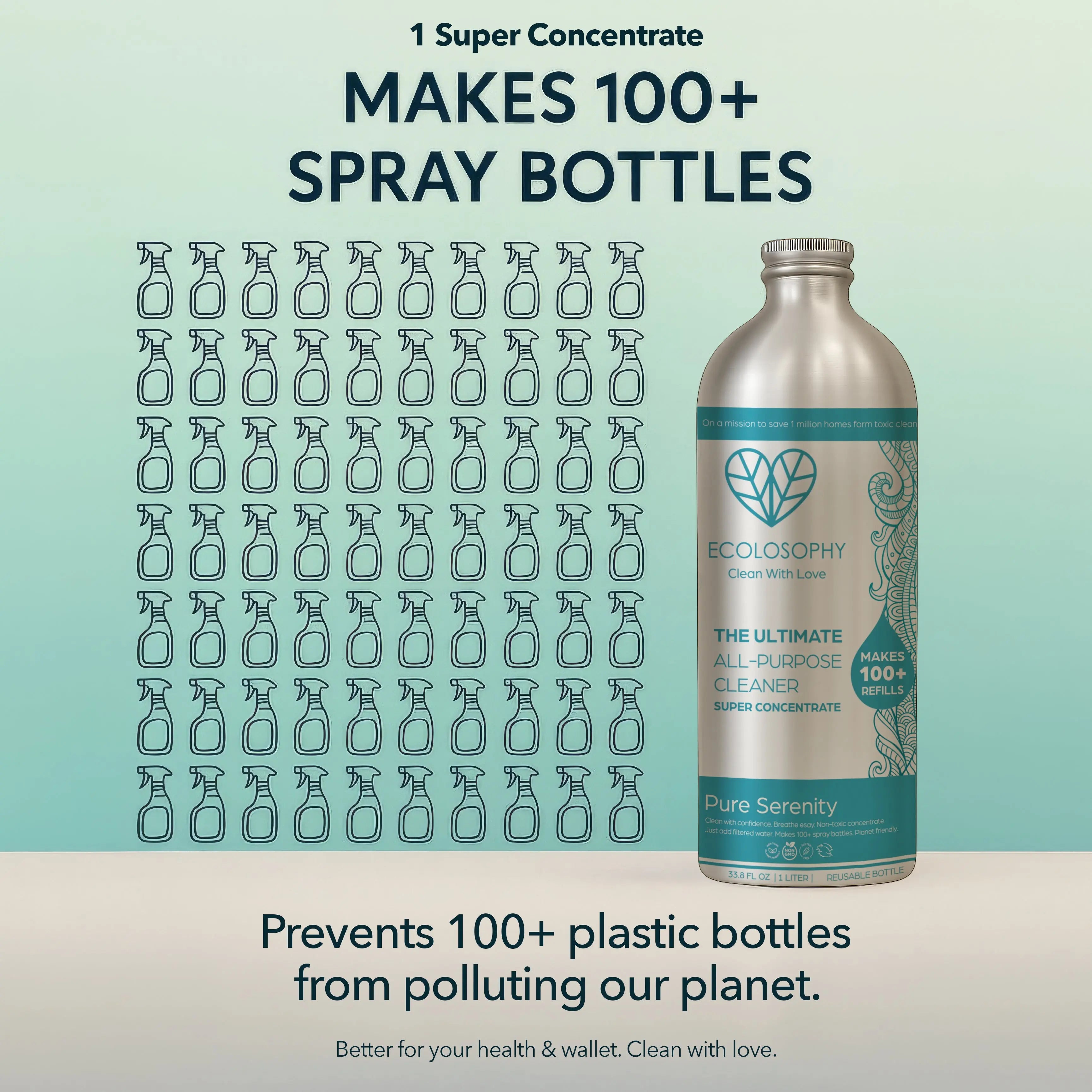
The Ecolosophy Pure Serenity Kit is built for exactly the everyday lane where alcohol falls short. It's plant-based, with no artificial scents — plant-based and fragrance-free — family-safe, pet-safe, and planet-safe — so you can clean as often as you like without rationing it or worrying about what's left behind on your toddler's high chair.
It's a concentrate, so you just add water: one bottle, priced as a $49.95–$65 kit depending on packaging, makes 100+ spray bottles of ready-to-use cleaner. That means you can refill the high-touch areas as often as you want without flinching at cost, and it saves roughly 42.75 lbs of CO2 per bottle versus buying dozens of single-use plastic cleaners. It's made in small batches, with care, and we publish what's in it — so you never have to wonder what you mopped onto your floor.
To be clear and fair: it's a cleaner, not an EPA-registered disinfectant, and it won't flash-dry on a circuit board the way alcohol does. Those are jobs for the right specialized tool. But for "wipe down my whole home, every day, around the people and animals I love," a plant-based concentrate you can use generously beats a flammable solvent you have to use sparingly.
Frequently asked questions
Is rubbing alcohol safe to use as an everyday cleaner?
It's safe for small, targeted jobs like wiping electronics, doorknobs, and removing sticky residue, used with ventilation and away from flame. It's a poor choice as a daily, whole-home cleaner because it's highly flammable, the vapor can irritate eyes and airways in closed rooms, and it dries skin and can damage some finishes with repeated use. For everyday cleaning, a plant-based cleaner you can use freely is the better default.
Is 70% or 91% rubbing alcohol better for cleaning?
CDC’s disinfection guideline gives 60%–90% alcohol in water as the optimum bactericidal range, so both 70% and 91% fall inside it. What CDC does say is that absolute (near-100%) alcohol is less effective than alcohol–water mixtures, because proteins denature faster in the presence of water — so a higher percentage is not automatically “stronger.”
Is rubbing alcohol safe around kids and pets?
It can be, with care — but the cautions matter more in a home with kids and pets. The vapor irritates smaller, developing airways and pets at floor level more than an adult, and ingestion of the liquid is dangerous, so it must be stored sealed and out of reach. For floors and low surfaces a child crawls on or a pet licks, a fragrance-free, plant-based cleaner removes much of that worry.
Can I use rubbing alcohol on my phone or laptop?
Yes — fast evaporation makes it a common choice for electronics. Use 70%, dampen a soft cloth rather than soaking the device, power it off, avoid getting liquid into ports and seams, and check the manufacturer's guidance, since some coated screens shouldn't be wiped with alcohol.
Why is rubbing alcohol considered a fire risk?
Both the liquid and its invisible vapor are highly flammable, and the vapor is heavier than air so it can travel along a surface to an ignition source like a gas pilot, candle, or hot appliance. Never use it in large amounts or near open flame, especially in the kitchen, and store it sealed away from heat.
Is the Ecolosophy concentrate a disinfectant?
No. The Ecolosophy All-Purpose Cleaning Concentrate is a cleaner, not an EPA-registered disinfectant. It cuts everyday dirt, grease, and grime across your home's surfaces. For specialized sanitizing of a small high-touch spot, a dedicated product used per its label is the right tool; for everyday whole-home cleaning, the concentrate is the better daily default.
📕 Free download · 28 pages
Not ready to switch yet? Get the free playbook.
28 pages, every non-toxic swap, room by room. One email, no spam.
We'll email it from hello@ecolosophy.com. Reply anytime — a real person answers.
Sent. Check your inbox.
The download link is heading to your email. If you don't see it in 2 minutes, look in Promotions or hit resend.
Or grab it right now: Download the 28-page PDF →
Couldn't deliver — try again? Retry
← Back to the full Non-Toxic Cleaning Guide
Keep Reading
Pure Serenity Kit
$69 · 4.97★ · 72 reviews